Identify the conditions under which you would decline the deal: an unsupported earnings figure, insufficient premises rights, a replacement budget beyond available liquidity or an operating role you cannot perform. These boundaries are more useful than a general claim that laundry is recession-resistant.
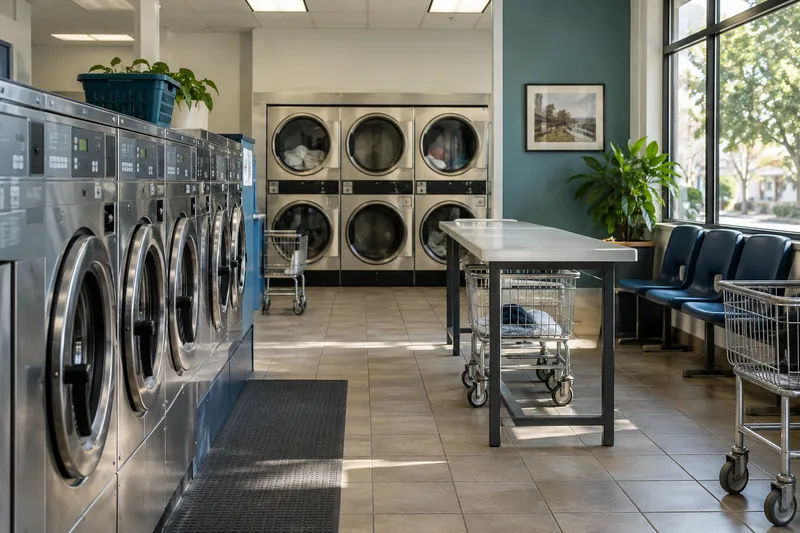
Every few years, a new wave of investors discovers laundromats as an alternative asset class and asks the same fundamental question: is buying a laundromat a good investment? In 2026, that question is more relevant than ever — interest rate pressures have made many traditional investments less attractive, recession concerns have investors seeking defensive assets, and Illinois's large renter population continues to provide a stable customer base for laundromat businesses. This guide gives you the honest, complete answer: the compelling reasons investors buy laundromats, the real risks most buyers underestimate, how Illinois market conditions affect your return, and when partnering with a broker makes sense.
The short answer is: yes, a laundromat can be an excellent investment in 2026 — but "can be" is doing a lot of work in that sentence. The outcome depends almost entirely on the quality of your acquisition analysis, the specific business you buy, and your operational approach after closing. Laundromats are not passive ATMs, and they're not for every investor. But for the right buyer with the right deal, they deliver returns that few comparable asset classes can match.
Why Laundromats Attract Recession-Resistant Investors
Stress the actual deal by reducing receipts, increasing a major expense and adding replacement labor. Test liquidity as well as annual profit. A business can be profitable on paper and still be unsuitable if cash arrives slowly while debt and repairs are due immediately.
Non-Discretionary Revenue
Measure consumption from the actual billing periods and installed equipment specifications. Verify billing units, wash formulas, non-vend use, fixed charges and the applicable tariff. A generic savings percentage or gallons-per-cycle assumption cannot establish this store’s expense, revenue or upgrade payback.
Cash Business With Immediate Revenue
Laundromats are cash (and card) businesses with no accounts receivable, no billing cycles, and no credit risk. Revenue is collected at the point of service. This eliminates the cash flow management complexity that kills many service businesses and makes laundromat income particularly predictable and dependable. Lenders recognize this quality — it's one reason SBA lenders are generally favorable toward laundromat acquisitions as described in our SBA loans guide.
Low Employee Requirements
Use an equipment-level inventory, service history and installed-cost quotes to evaluate the proposal. Track the effect on availability, repair response and customer use rather than assuming a standard revenue lift or repair saving. Retain evidence of the results a buyer will actually inherit.
Strong Returns on Invested Capital
Build the forecast from documented receipts, contracts and operating costs, with a clearly labeled base case and downside case. Deduct replacement labor, sustainable capital needs and scheduled financing when assessing owner cash. An industry headline cannot substitute for the store’s own records or justify an unverified growth assumption.
Illinois's Renter Population Advantage
Evaluate the full occupancy obligation using the signed lease, amendments and additional-rent history. Include known escalations and repair responsibilities, then test the store’s cash flow after planned labor and financing. No universal rent ratio makes an uncertain assignment or renewal right acceptable.
The Real Risks Most Buyers Don't Talk About
Anyone selling you on laundromats as passive income machines is not giving you the complete picture. This asset class has genuine risks that every buyer must understand before committing capital.
Equipment Capital Intensity
Lease Dependency and Landlord Risk
A laundromat is a location-dependent business. Your equipment is bolted to the floor; you can't pick up and move. This means the lease is a critical asset — and a problematic lease is a fundamental business risk. Leases with insufficient term remaining, landlords who might redevelop the property, ambiguous assignment provisions, or above-market rent escalators can materially impair the business value or even threaten the business's existence. Our guide on understanding laundromat lease agreements covers the specific provisions every buyer must negotiate.
Revenue Verification Complexity
Laundromats are historically cash businesses, which creates a legitimate challenge: sellers can underreport revenue on taxes (reducing their tax bill) or overstate revenue in listing materials (inflating their asking price). Sophisticated buyers verify revenue independently through water utility bills, which correlate directly with machine usage — you cannot fake water consumption. Buyers who accept seller-provided revenue figures without independent verification are taking on undisclosed financial risk.
Competition and Market Evolution
Management Requirements
How Illinois Market Conditions Affect Your Return
Illinois's diverse market landscape — from dense urban Chicago to mid-size cities to rural communities — creates meaningfully different investment profiles depending on where you buy.
Chicago Metro: High Revenue, High Competition, Higher Prices
Use a multiple only after identifying the income measure, the included assets and the comparison period. National reported sold-business benchmarks are useful context, but they do not establish a city-specific price or real-estate cap rate. Compare the underlying earnings definitions before drawing a conclusion.
Suburbs: Balance of Access and Returns
The defensible price is the one supported by verified earnings, transferable premises rights and the equipment obligations a buyer will inherit. Keep business value separate from real estate and explain capital needs without counting the same expense twice. A headline multiple is a starting question, not an appraisal.
Mid-Size and Downstate Markets: Value Opportunities
Distinguish advertised asking terms from completed reported transactions. Review the national historical benchmark in the valuation guide, then assess the particular lease, documentation, labor requirements and deferred equipment spending. The price of another store cannot be applied without those differences.
Illinois Tax and Regulatory Environment
Illinois's tax environment is a factor every investor must understand. Laundromat sales are generally taxable in Illinois (unlike many states where cleaning services are exempt), Illinois commercial property tax rates are among the highest in the nation and affect lease renewal negotiations, and business income taxes require proper accounting structure. Working with an Illinois-experienced accountant and attorney is not optional — it's essential. Our laundromat taxes guide covers the Illinois-specific considerations in detail.
When It Makes Sense to Buy vs. Partner With a Broker
Deciding whether to engage a broker or pursue a laundromat acquisition independently isn't just about cost — it's about what capabilities you need for your specific situation.
When You Can Navigate Independently
Independent acquisition makes the most sense when you have direct personal connections to motivated sellers who trust you, significant prior business acquisition experience (you've closed deals before and understand due diligence), deep knowledge of the specific local market where you're buying, and established relationships with Illinois laundromat-experienced attorneys and SBA lenders. These conditions exist for experienced investors with specific local networks — a minority of buyers.
When Broker Representation Is Essential
For an SBA-backed acquisition, confirm the current program rules and the lender’s written conditions for this borrower and transaction. The individual loan maximum, combined borrowing policy, required equity and treatment of seller debt are distinct questions. A lender must approve the complete uses-of-funds and repayment structure.
The Cost of Getting It Wrong
The asymmetry of outcomes in laundromat acquisition is important to appreciate. A well-executed purchase delivers years of strong cash flow and solid returns. A poorly executed purchase — buying a business with inflated revenue, undisclosed equipment problems, or a problematic lease — can result in losses measured in six figures. The downside of a bad acquisition vastly exceeds any savings from avoiding professional guidance. This asymmetry is precisely why experienced investors consistently use specialized brokers even when they don't strictly need to.
Frequently Asked Questions: Laundromat Investment in 2026
Is a laundromat a good investment for beginners?
Laundromats can be excellent investments for beginners — but not without professional guidance. First-time buyers should work with a specialized broker to navigate revenue verification, due diligence, financing, and negotiation. The learning curve is real, and the cost of mistakes is high. With proper support, first-time buyers successfully acquire and operate profitable laundromats throughout Illinois every year.
Are laundromats truly recession-proof?
How much money do I need to buy a laundromat in Illinois?
What is the average return on investment for a laundromat?
Is laundromat income truly passive?
Build staffing from the actual tasks, coverage requirements and market quotes for the work. Include owner responsibilities that will need to be replaced after closing. The distinction between SDE and managed-store cash flow matters more than a generic promise of low owner hours.
What are the biggest risks in buying a laundromat?
The five most significant risks are: (1) unverified or inflated revenue claims, (2) aging equipment requiring near-term replacement, (3) problematic or short-term leases, (4) new competitive entry in your market, and (5) underestimating ongoing time and operational involvement required. All five risks can be substantially mitigated through thorough due diligence before closing.
Start Your Illinois Laundromat Search With Expert Guidance
Illinois Laundry Broker helps buyers navigate the 2026 Illinois laundromat market — from finding the right opportunity to completing a successful acquisition with confidence.
Schedule a Free ConsultationYes — If You Do the Work
But "laundromat investment" is not a monolithic category. A premium Chicago urban store with new equipment and a long-term lease is a very different investment than a downstate coin laundry with 15-year-old machines and a lease expiring in 18 months. The difference between a great laundromat investment and a bad one in 2026 Illinois is almost entirely about the quality of your analysis and the rigor of your due diligence process — not the asset class itself.
If you're seriously considering entering the Illinois laundromat market in 2026, start the conversation with Illinois Laundry Broker. We provide buyers with honest market analysis, access to quality listings, and the professional guidance needed to make informed, confident investment decisions.
Word count: 2,763
Write an investment case that can fail
Stress the actual deal by reducing receipts, increasing a major expense and adding replacement labor. Test liquidity as well as annual profit. A business can be profitable on paper and still be unsuitable if cash arrives slowly while debt and repairs are due immediately.
Sources and review notes
Reviewed October 15, 2026. Primary references support the specific topics below. Practical checklists and explicitly labeled scenarios are our editorial analysis, not reported market outcomes.
- SBA: 7(a) loan program
Program purposes, eligibility and the individual 7(a) loan maximum. - IRS: Publication 334, tax guide for small business
Business recordkeeping, income and expense treatment; owner distributions are not automatically an expense add-back. - BizBuySell: reported sold laundromat valuation benchmarks, 2021–2025
National reported transactions; asking and sold figures are separate. These are historical category benchmarks, not Illinois-specific comparable sales.
Use this material to prepare questions and documents. A specific transaction needs its own legal, tax, lending and equipment review.
Thinking about selling your laundromat?
Start with a private conversation about your records, lease, equipment and timing. You do not need to have a price in mind.
Discuss your next step