Create a lease abstract covering term, options, rent, additional charges, assignment, guarantees, permitted use, repair responsibility, utilities and removal obligations. Read the amendments and side letters with the original document; a summary based only on the first page can miss the controlling terms.
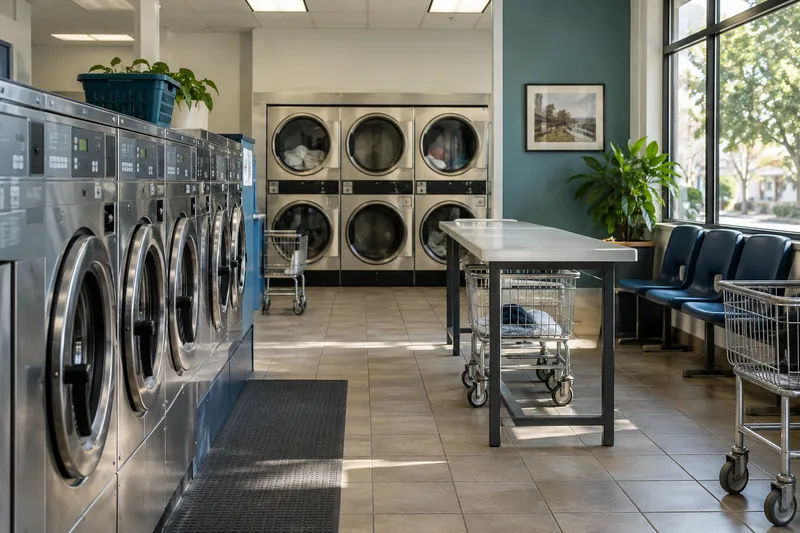
In the laundromat business, the lease is often worth more than the equipment. You can replace washers and dryers. You cannot replace a location where a business has operated successfully for 20 years — not without starting over. Yet most first-time buyers in Illinois spend weeks analyzing equipment and financials while giving the laundromat lease agreement a quick skim before signing. That's a mistake that can cost tens of thousands of dollars and, in some cases, the entire business. This guide covers every key commercial lease term Illinois laundromat buyers and owners must understand — from the foundational clauses to the hidden provisions that have derailed more than a few profitable deals.
Whether you're buying a laundromat in Illinois and inheriting an existing lease, or negotiating a new lease with a landlord before building out or acquiring a location, this guide gives you the knowledge to protect your investment from day one.
What Every Illinois Laundromat Buyer Must Look for in a Commercial Lease Agreement
A commercial lease is fundamentally different from a residential lease — and more dangerous to sign without understanding. Landlords draft commercial leases to protect their interests, not yours. In Illinois, commercial leases are largely governed by whatever the parties agree to in writing, which means there's significant room for negotiation — if you know what to ask for.
Lease Term and Renewal Options
The lease term is the foundation of your investment security. A laundromat requires significant capital investment — in equipment, buildout, and goodwill — that only makes sense if you have long-term occupancy certainty. Look for:
- Make the decision from the actual operating records and transaction terms. Record the assumptions, identify the supporting documents and test the effect of a less favorable outcome. Keep an illustrative possibility separate from a documented result or a promise about what a buyer or seller will achieve.
- Renewal options: At least two 5-year options, exercisable at your discretion
- Renewal rent terms: Fixed rental increases are preferable to "fair market value" renewals, which can be unpredictable
A laundromat with 3 years remaining on the lease and no renewal option is worth significantly less than one with 10 years remaining and two 5-year options. Factor this directly into your valuation and offer price. For full context on how lease terms factor into SBA financing requirements and the overall due diligence process, see our 2026 laundromat due diligence guide — it covers lease review as one of five critical due diligence categories.
Base Rent and Escalation Clauses
Evaluate the full occupancy obligation using the signed lease, amendments and additional-rent history. Include known escalations and repair responsibilities, then test the store’s cash flow after planned labor and financing. No universal rent ratio makes an uncertain assignment or renewal right acceptable.
- Fixed dollar increases: A specific dollar amount per year (most predictable for budgeting)
Assignment and Subletting Provisions
This is the clause that determines whether you can sell your laundromat. If the lease is not assignable — or requires landlord approval that can be withheld arbitrarily — you may not be able to sell the business without either buying out the lease or re-negotiating with the landlord at the time of sale. Both scenarios reduce your business's value significantly.
When buying a laundromat in Illinois, confirm that the existing lease contains an assignment clause that allows transfer to a buyer with the landlord's consent — and that consent cannot be "unreasonably withheld." This specific language is critical and worth engaging an attorney to ensure it's properly documented.
Hidden Lease Clauses That Could Cost Illinois Laundromat Owners Thousands
Beyond the obvious terms — rent, term, renewal options — commercial leases contain provisions that are easy to overlook but potentially devastating. These are the clauses that experienced Illinois laundromat brokers and attorneys flag as the most dangerous for buyers to miss.
Co-Tenancy and Anchor Tenant Clauses
Some strip mall and shopping center leases contain co-tenancy provisions that allow your rent to be reduced if a major anchor tenant leaves — which sounds beneficial until you realize the same clause can also allow a landlord to terminate your lease if certain conditions aren't met. Understand any co-tenancy language completely before signing.
Exclusivity Provisions (Or the Lack Thereof)
Does your lease prevent the landlord from renting to a competing laundromat in the same shopping center or property? Without an exclusivity clause, nothing stops a landlord from leasing the adjacent space to another laundromat. Negotiate an exclusivity provision that prohibits coin-operated or card-based laundry facilities within the same property or complex.
Demolition and Relocation Clauses
Some commercial leases — particularly in older Illinois strip malls — contain demolition or relocation clauses that allow the landlord to terminate your lease with limited notice if they decide to redevelop the property. This risk is often overlooked by buyers, especially in the Chicago metro area where real estate development activity is significant. Have your attorney identify and attempt to strike or limit any such clauses before signing or assuming a lease.
Permitted Use Language
Your lease must explicitly permit laundromat operations, including commercial washing, drying, and related services. Vague "retail" use language may not cover your specific business activities — particularly if you plan to add wash-dry-fold service, dry cleaning drop-off, or vending machines. Get specific permitted use language that covers everything you plan to operate.
CAM Charges and Triple Net Provisions
Have the transaction’s tax adviser distinguish the operating assets from qualifying real property and review the proposed allocation before closing. Rates, basis, gain character and reporting depend on the taxpayer and the assets. An exchange or seller note does not automatically defer every tax associated with selling a laundry business.
How to Negotiate Favorable Lease Terms for Your Illinois Laundromat Business
Commercial lease negotiation for laundromats in Illinois requires a different approach than residential or even typical retail negotiations. Laundromats are high-investment, location-dependent businesses — which means you have more leverage than you might think. Landlords value stable, long-term tenants who make infrastructure investments and consistently pay rent on time. Use that leverage.
Negotiating Key Concessions
Before accepting any lease as-is, negotiate for these standard and reasonable concessions:
- Tenant improvement allowance (TIA): A landlord contribution to your buildout or equipment installation costs
- Renewal at fixed rates: Lock in renewal rent at the current rate plus a defined, modest escalation
- Right of first refusal: First opportunity to purchase the property if the landlord decides to sell
- Relocation reimbursement clause: If the landlord ever requires you to relocate, they must fund your reasonable relocation costs
Working With a Tenant Representative
For significant lease negotiations — whether signing a new lease for a new Illinois laundromat location or renegotiating terms during a sale — working with an experienced tenant representative or commercial real estate attorney pays off substantially. The cost of professional representation is modest compared to the long-term impact of favorable lease terms secured correctly. Illinois Laundry Broker works with clients throughout this process, connecting buyers with experienced transaction professionals. Learn more about our full range of services for laundromat buyers and sellers.
Illinois Commercial Lease Red Flags: Protect Your Laundromat Investment Before You Sign
After reviewing hundreds of laundromat leases across Illinois, experienced brokers consistently encounter the same red flags. Here's what to watch for — and what to do if you find them.
Top Lease Red Flags for Illinois Laundromat Buyers
- Less than 5 years remaining with no renewal option — a deal-breaker without a new lease negotiated simultaneously
- Lease not assignable without landlord's "sole discretion" approval — undermines your ability to resell
- Personal guarantee with no carve-outs — particularly risky for LLC owners who want liability protection
- Demolition or redevelopment clauses with less than 180 days' notice
- No exclusivity clause in a multi-tenant property
- Unlimited CAM charges with no historical data and no cap
What to Do If You Find Red Flags
Finding a red flag doesn't necessarily mean walking away — it means negotiating. Most lease provisions are negotiable, particularly if you're bringing a long-term occupancy commitment and a record of stable tenancy. Work with an attorney to propose specific language changes for any problematic clause. If the landlord is unwilling to modify clear risk provisions, that tells you something important about what kind of landlord-tenant relationship you'd be entering. For perspective on how lease terms affect overall business value, review our complete guide to laundromat valuation.
Frequently Asked Questions: Laundromat Lease Agreements in Illinois
How long should a laundromat lease be in Illinois?
Most experienced laundromat investors prefer a minimum primary term of 5 years with two 5-year renewal options. This provides 15 years of occupancy security — enough time to recoup the capital investment in equipment and improvements while building meaningful business value. Shorter primary terms without options significantly reduce the business's fair market value.
What is a CAM charge and how much should I expect to pay?
Can a landlord refuse to assign my laundromat lease to a buyer?
In Illinois, the landlord's right to withhold assignment consent depends entirely on the lease language. If the lease says consent cannot be "unreasonably withheld," the landlord has limited grounds for refusal if the proposed buyer is financially qualified. If the lease allows the landlord to withhold consent at their "sole discretion," they can effectively block your sale. Always negotiate assignment provisions upfront.
Should I use a personal guarantee for my laundromat lease?
What is a good rent-to-revenue ratio for a laundromat in Illinois?
Can I negotiate the lease terms when buying an existing laundromat?
Yes — in fact, many buyers use the acquisition as an opportunity to negotiate improved lease terms simultaneously with the purchase. The landlord typically prefers continuity of occupancy and can be receptive to a qualified, committed new tenant who wants to invest in the facility long-term. This is often one of the most valuable things an experienced Illinois laundromat broker can facilitate on your behalf.
Get Expert Lease Review Support
Illinois Laundry Broker helps buyers evaluate and negotiate lease terms as part of every transaction. Our market experience and professional network ensures your lease protects your investment for the long term.
Request a Free ConsultationYour Lease Is Your Business's Foundation
In the laundromat business, a favorable lease isn't just a detail — it's one of the primary drivers of business value. The length of your remaining term, your renewal rights, your rent escalation structure, and your assignment provisions all directly determine what your business is worth to a future buyer and how profitable it will be over your ownership period.
Take the time to understand every clause in any laundromat lease agreement in Illinois before you sign. Engage an attorney who understands Illinois commercial real estate. Push back on provisions that limit your flexibility or create unacceptable long-term risk. And if you're buying an existing laundromat, treat the lease review with the same rigor you'd apply to the equipment inspection and financial verification.
The team at Illinois Laundry Broker is here to guide you through every step of the acquisition process — including the all-important lease review. Contact us today to start your search with confidence.
Word count: 2,752
Abstract the rights a buyer must inherit
Ask the landlord about the proposed transfer process early without making commitments the seller or buyer cannot satisfy. The attorney should review the actual documents. A long nominal term does not solve a personal renewal option, a restrictive assignment clause or an uncapped expense obligation.
Sources and review notes
Reviewed October 15, 2026. Primary references support the specific topics below. Practical checklists and explicitly labeled scenarios are our editorial analysis, not reported market outcomes.
- SBA: 7(a) loan program
Program purposes, eligibility and the individual 7(a) loan maximum. - U.S. Department of Justice: small business accessibility guidance
Public accommodation obligations and accessibility planning; evaluate the actual facility with qualified advisers. - IRS: Form 8594, asset acquisition statement
Buyer/seller reporting for applicable asset acquisitions and purchase-price allocation.
Use this material to prepare questions and documents. A specific transaction needs its own legal, tax, lending and equipment review.
Thinking about selling your laundromat?
Start with a private conversation about your records, lease, equipment and timing. You do not need to have a price in mind.
Discuss your next step