A simple service is not the same as a simple business. A laundry must repeatedly deliver working machines, available utilities, cleanliness, payment access and help when something fails. Build your ownership case around the repeatability of those tasks and the cost of making them reliable without the seller.
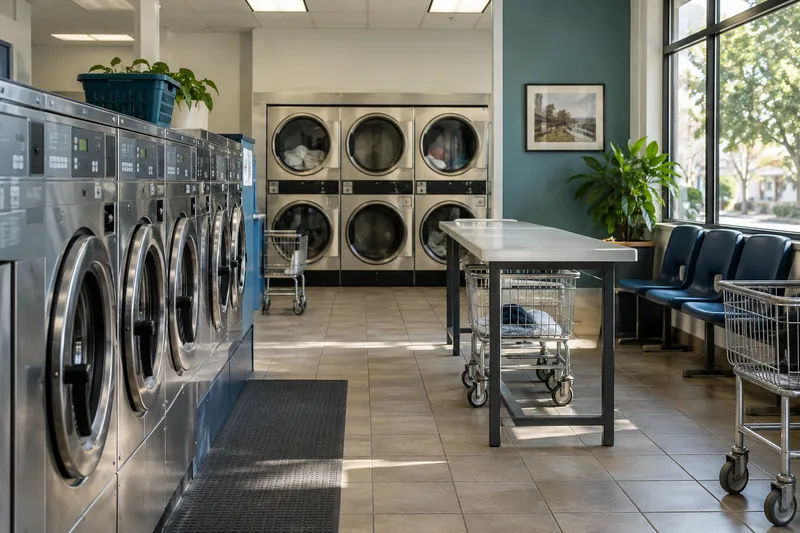
There's a quiet revolution happening in small business investing, and it doesn't involve AI startups, crypto, or any of the assets that dominate financial media. It involves washing machines. The boring business passive income movement — popularized by investors who deliberately seek out unglamorous, overlooked, essential-service businesses — has made laundromats one of the most sought-after acquisition targets among sophisticated wealth-builders in 2026. While everyone else chases the next shiny object, these investors are collecting predictable cash flows from a business model that hasn't changed much since the 1950s. And that, it turns out, is exactly the point.
Write the first operating budget before making an offer. Include management time, repairs, replacement reserves and an emergency response plan alongside rent and utilities. If the return disappears once those responsibilities are priced, the business is offering compensation for your labor rather than the passive investment described in a listing.
The Allure of Recession-Resistant Assets
Let's start with an honest question: what business do you know that kept its doors open during COVID-19, maintained revenue through the 2008 financial crisis, and has never once had a year where the fundamental customer need disappeared? Laundromats fit that description completely — and very few other small businesses can say the same.
Why "Boring" Outperforms Over Time
The boring business thesis isn't a new one. Warren Buffett built Berkshire Hathaway by acquiring businesses that make ketchup, underwear, and insurance — industries so stable they're almost soporific. The logic is simple: excitement and innovation attract competition, drive up valuations, and introduce execution risk. Boredom attracts nobody, which means lower entry prices, less competition, and predictable returns. A laundromat in a working-class Illinois neighborhood generates roughly the same revenue pattern in year five as it did in year one. There's no viral growth, but there's also no cliff.
Make the decision from the actual operating records and transaction terms. Record the assumptions, identify the supporting documents and test the effect of a less favorable outcome. Keep an illustrative possibility separate from a documented result or a promise about what a buyer or seller will achieve.
Non-Discretionary Demand: The Structural Advantage
Build the forecast from documented receipts, contracts and operating costs, with a clearly labeled base case and downside case. Deduct replacement labor, sustainable capital needs and scheduled financing when assessing owner cash. An industry headline cannot substitute for the store’s own records or justify an unverified growth assumption.
Cash Business With Zero Receivables Risk
Here's something that separates laundromats from virtually every other service business: payment is immediate. There are no invoices, no net-30 payment terms, no chasing accounts receivable, and no bad debt write-offs. Every wash cycle generates revenue at the moment of service. For investors who've dealt with the cash flow complexity of service businesses that bill on credit, this characteristic is genuinely transformative. It makes financial modeling straightforward and cash flow predictability genuinely achievable.
Labor Simplicity That Compounds Over Time
Use an equipment-level inventory, service history and installed-cost quotes to evaluate the proposal. Track the effect on availability, repair response and customer use rather than assuming a standard revenue lift or repair saving. Retain evidence of the results a buyer will actually inherit.
Analyzing 2026 Cash Flow Projections
Theory is one thing. Numbers are another. Let's look at what actual laundromat cash flows look like in the Illinois market right now — because the numbers, when you see them clearly, are why investors are paying attention.
Compare documented receipts by operating model
Operating Margins and Owner Earnings
For an SBA-backed acquisition, confirm the current program rules and the lender’s written conditions for this borrower and transaction. The individual loan maximum, combined borrowing policy, required equity and treatment of seller debt are distinct questions. A lender must approve the complete uses-of-funds and repayment structure.
The Debt Service Math
Appreciation and Exit Value
The defensible price is the one supported by verified earnings, transferable premises rights and the equipment obligations a buyer will inherit. Keep business value separate from real estate and explain capital needs without counting the same expense twice. A headline multiple is a starting question, not an appraisal.
Building a Passive Management Structure
The Four Pillars of Passive Operations
Experienced absentee laundromat operators consistently point to four operational pillars that make their businesses run without daily involvement. First, preventive maintenance contracts: rather than calling a technician when a machine breaks, they have standing service agreements with qualified laundry equipment technicians who perform monthly inspections. Machine downtime — the biggest revenue killer — drops dramatically. Second, automated monitoring: modern payment systems and remote monitoring tools provide real-time revenue data, machine status alerts, and occupancy patterns from a smartphone. Third, cleaning protocols: a reliable daily or every-other-day cleaning service maintains the facility quality that keeps customers returning. Fourth, cash/card collection routines: for coin stores, a reliable and vetted collection partner; for card-based stores, automatic deposits eliminate the need for any physical collection.
Staffing Decisions: Attended vs. Unattended
Attended laundromats — those with a staff member present during business hours — generate higher revenue (customers feel safer, attendants can upsell services, issues get resolved immediately) but require staffing infrastructure. Unattended stores require less operational overhead but demand more robust systems. Neither model is universally better; it depends on the specific market, customer demographics, and owner preference. Our analysis of laundromat passive income and absentee ownership models explores both options in depth.
Technology That Enables Distance
Why Illinois is the Prime Market for Boring Businesses
Not all markets are equally suited to laundromat investment. Illinois — and the Chicago metro in particular — has a specific combination of demographic, economic, and housing characteristics that make it unusually attractive for this asset class.
Renter Demographics: A Structural Tailwind
Evaluate the full occupancy obligation using the signed lease, amendments and additional-rent history. Include known escalations and repair responsibilities, then test the store’s cash flow after planned labor and financing. No universal rent ratio makes an uncertain assignment or renewal right acceptable.
Market Density Without Saturation
Access to SBA Financing
Use a multiple only after identifying the income measure, the included assets and the comparison period. National reported sold-business benchmarks are useful context, but they do not establish a city-specific price or real-estate cap rate. Compare the underlying earnings definitions before drawing a conclusion.
Downstate Value Markets
Frequently Asked Questions: The Boring Business Blueprint
What exactly is a "boring business" and why are investors targeting them?
How much do I need to invest to buy an Illinois laundromat?
Is laundromat income truly passive or does it require constant work?
Build staffing from the actual tasks, coverage requirements and market quotes for the work. Include owner responsibilities that will need to be replaced after closing. The distinction between SDE and managed-store cash flow matters more than a generic promise of low owner hours.
What's the typical return on investment for an Illinois laundromat?
What are the biggest risks in laundromat investing?
The primary risks are: (1) buying a business with inflated or unverified revenue, (2) aging equipment requiring near-term capital replacement, (3) a problematic lease with insufficient term, (4) new competitive entry in your market, and (5) underestimating ongoing operational time requirements. All five are manageable with proper due diligence and professional guidance before closing.
How do I find laundromats for sale in Illinois that aren't publicly listed?
The most attractive deals — particularly those with motivated sellers, below-market pricing, or unique location advantages — rarely appear on public listing platforms. They're found through broker networks, direct mail campaigns to existing laundromat operators, relationships with equipment vendors who know which owners are aging out, and word-of-mouth in the operator community. Working with an experienced Illinois laundromat broker is the most reliable way to access off-market inventory.
How does a laundromat compare to rental real estate as a passive income investment?
The Best Investments Don't Make Headlines
The boring business blueprint works because it runs counter to every instinct that financial media cultivates. There's no exciting narrative, no viral moment, no exponential upside story to tell at a dinner party. What there is: a machine that washes clothes for a customer who needed clean laundry today and will need clean laundry again next week, and the week after that, for as long as they live within walking distance of your store.
That predictability — the quiet, compounding certainty of non-discretionary demand — is exactly what makes laundromats the most compelling boring business investment of 2026. Illinois investors who understand this aren't chasing trends; they're building wealth systematically, with an asset class that has quietly delivered consistent returns for generations while the rest of the investment world lurched from bubble to bubble.
If you're ready to look seriously at this asset class, start with a conversation. At Illinois Laundry Broker, we work exclusively with laundromat buyers and sellers across the state — and we can help you find the boring business that makes your financial future a lot more interesting.
Word count: 2,743
Underwrite repeatability instead of passivity
Write the first operating budget before making an offer. Include management time, repairs, replacement reserves and an emergency response plan alongside rent and utilities. If the return disappears once those responsibilities are priced, the business is offering compensation for your labor rather than the passive investment described in a listing.
Sources and review notes
Reviewed October 15, 2026. Primary references support the specific topics below. Practical checklists and explicitly labeled scenarios are our editorial analysis, not reported market outcomes.
- SBA: 7(a) loan program
Program purposes, eligibility and the individual 7(a) loan maximum. - IRS: Publication 334, tax guide for small business
Business recordkeeping, income and expense treatment; owner distributions are not automatically an expense add-back. - BizBuySell: reported sold laundromat valuation benchmarks, 2021–2025
National reported transactions; asking and sold figures are separate. These are historical category benchmarks, not Illinois-specific comparable sales.
Use this material to prepare questions and documents. A specific transaction needs its own legal, tax, lending and equipment review.
Thinking about selling your laundromat?
Start with a private conversation about your records, lease, equipment and timing. You do not need to have a price in mind.
Discuss your next step