An absentee plan needs controls for receipts, refunds, employee permissions, customer complaints, keys and contractor access. Specify what the owner reviews, how often exceptions are escalated and who can act when the owner is unavailable. Outsourcing tasks does not outsource accountability.
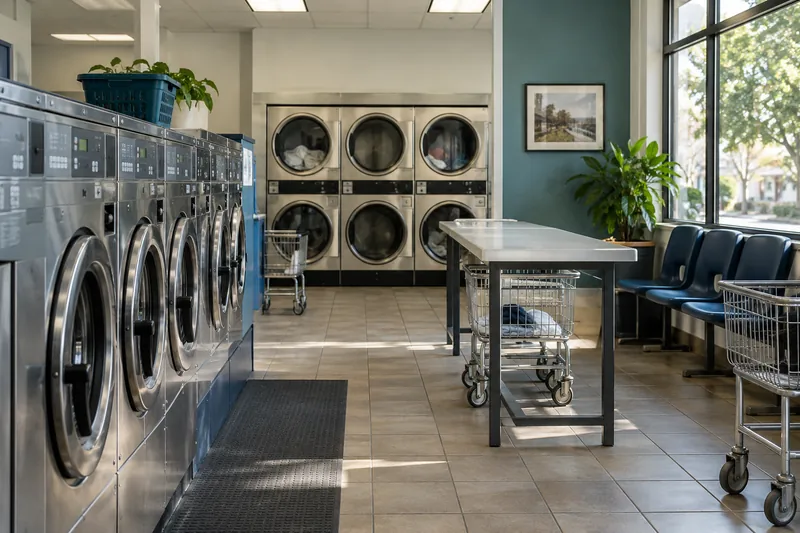
Of all the reasons people consider buying a laundromat, the promise of laundromat passive income is the most compelling — and the most frequently overstated. The internet is full of content describing laundromats as near-passive cash machines, requiring only minimal oversight while generating thousands in monthly income. Some of that content is accurate in certain conditions; a lot of it is optimistic fiction. This guide gives you the complete, honest picture of absentee laundromat ownership in Illinois — what's genuinely achievable, what systems make it possible, what costs most owners underestimate, and how to structure a purchase specifically for semi-passive operation.
Build staffing from the actual tasks, coverage requirements and market quotes for the work. Include owner responsibilities that will need to be replaced after closing. The distinction between SDE and managed-store cash flow matters more than a generic promise of low owner hours.
The Truth About Absentee-Owned Laundromats in Illinois
Illinois laundromats run on a spectrum from fully owner-operated (owner present most operating hours) to nearly absentee (owner visits once or twice per week for cleaning and collections). Where a specific business falls on this spectrum depends on its size, market, operating model, and the systems the owner has built.
What "Absentee" Actually Means in Practice
The term "absentee-owned" in laundromat listings typically means the current owner is not present during operating hours and does not personally perform attendant functions. It does not mean zero owner involvement. Even well-systemized absentee laundromats require owner time for: equipment maintenance scheduling and vendor coordination, facility cleaning (either performed by owner or managed contractor), banking and financial management, responding to equipment issues (a down machine means lost revenue every hour), regulatory compliance, and general business oversight.
Absentee vs. Owner-Operated: The Revenue Trade-Off
Use an equipment-level inventory, service history and installed-cost quotes to evaluate the proposal. Track the effect on availability, repair response and customer use rather than assuming a standard revenue lift or repair saving. Retain evidence of the results a buyer will actually inherit.
Markets Where Absentee Works Best
Some Illinois markets are more amenable to absentee laundromat operations than others. Suburban markets with lower crime rates, strong anchor tenant co-tenancies, and customer demographics that self-police facility condition tend to operate better as absentee stores. Dense urban markets with higher vandalism rates, more customer service needs, and more competitive environments typically perform better with some level of active management. Understanding your target market's fit for absentee operation is part of intelligent acquisition planning.
What Systems You Need Before Going Hands-Off
Absentee laundromat ownership isn't just a management style — it's a systems deployment challenge. The owners who successfully run laundromats with minimal personal involvement have invested in specific operational infrastructure that enables remote management.
Card-Based Payment Systems
Card payment systems are essentially mandatory for absentee operation. Coin-based laundromats require regular coin collection (typically weekly) and are vulnerable to coin theft. Card systems (Speed Queen Connect, Laundroview, PayRange, and similar) enable cashless operation with digital revenue tracking, remote machine monitoring, and virtual coin vault elimination. For absentee owners, the revenue tracking capability alone — seeing daily revenue data on your phone without visiting the store — is worth the conversion cost. Card systems also reduce coin-related theft and vandalism that creates operational headaches for absentee stores.
Remote Monitoring Technology
Modern laundromat monitoring systems provide real-time equipment status, cycle counts, and alert notifications when machines go offline or need attention. Systems like LaundroWorks and similar platforms allow owners to monitor multiple locations remotely, receive automated alerts when machines malfunction, and track operational metrics without being physically present. For absentee owners, this visibility is essential — you can't manage what you can't measure, and you can't identify problems you don't know about.
Reliable Service Vendor Relationships
Absentee operation requires pre-established relationships with reliable, responsive service vendors: a laundromat equipment technician who can respond within hours to critical machine failures, a cleaning service or reliable part-time employee for facility maintenance, and a plumber and electrician familiar with laundromat infrastructure for utility issues. The absence of these relationships is what transforms minor equipment issues into revenue-destroying multi-day downtime for absentee owners who scramble to find help after a problem occurs.
Documented Operating Procedures
Any function you delegate — cleaning, minor maintenance, coin collection, customer issue response — needs documented procedures. For absentee owners who rely on occasional part-time help, clearly documented expectations ensure consistent execution. The time invested in creating operating documentation pays back in reduced oversight requirement and more consistent facility performance.
Real Labor and Management Costs Owners Underestimate
One of the most common miscalculations in absentee laundromat acquisition is underestimating the true cost of semi-passive operation. The financial model needs to include all real costs — not just the documented labor costs from the seller's P&L.
The Owner's Time Has Value
Distinguish advertised asking terms from completed reported transactions. Review the national historical benchmark in the valuation guide, then assess the particular lease, documentation, labor requirements and deferred equipment spending. The price of another store cannot be applied without those differences.
The True Cost of Cleaning
Evaluate the full occupancy obligation using the signed lease, amendments and additional-rent history. Include known escalations and repair responsibilities, then test the store’s cash flow after planned labor and financing. No universal rent ratio makes an uncertain assignment or renewal right acceptable.
Equipment Response and Repair Coordination
Machine downtime in a laundromat is revenue that's permanently lost — there's no catching up on laundry cycles that didn't happen while a machine was down. Absentee owners who don't have responsive vendor relationships lose more revenue to downtime than owner-operated stores where the owner can restart a machine or do basic troubleshooting immediately. Budget for faster-response service contracts (premium pricing) if you plan to operate absentee — the revenue protection is worth the cost.
Security and Vandalism Costs
How to Structure a Purchase for True Semi-Passive Income
If semi-passive laundromat income is your goal, the acquisition itself needs to be structured with that in mind — not retrofitted to a semi-passive model after you've already closed on the wrong business.
Buy the Right Type of Laundromat
Target stores that are already running absentee or with minimal owner involvement. A seller who is genuinely absentee has already solved the systems problem — the cleaning is contracted, the equipment is maintained by vendors, the payment system is card-based. Buying a currently owner-operated store and trying to convert it to absentee operation is significantly harder than buying an already-absentee store and maintaining that operating model. In listing materials, look for phrases like "absentee-owned," "minimal owner hours," or "investor-ready." Our guide on absentee vs. owner-operated models explains how to evaluate these two listing types.
Size and Complexity Matters
Financial Modeling for Absentee Operation
Your acquisition financial model should explicitly include all labor costs for the semi-passive scenario: contracted cleaning, service vendor response agreements, card payment system fees, and remote monitoring costs. The net cash flow after these expenses is your true semi-passive income figure — not the seller's raw SDE. If the business needs to be valued based on the cash flow it generates under absentee operation, that's the number that should drive your offer price. Review your complete financial model against our laundromat ROI framework to confirm the numbers work under your specific operating assumptions.
Frequently Asked Questions: Laundromat Passive Income and Absentee Ownership
Can a laundromat really be passive income?
How much profit can an absentee-owned laundromat generate?
What is the biggest risk of absentee laundromat ownership?
The biggest risk is facility quality degradation. Without adequate owner oversight, cleaning standards slip, equipment issues take longer to resolve, and the store's competitive position erodes over time. This results in declining revenue that often accelerates — once customers start using competitor stores due to cleanliness issues, recapturing them is difficult. Proactive oversight systems prevent this deterioration.
Do card-based laundromats work better for absentee owners?
Yes — significantly. Card systems eliminate coin collection requirements, provide real-time revenue visibility, reduce theft risk, and generate transaction-level data that enables remote performance monitoring. For absentee owners, card systems are essentially table stakes — operating a coin-only store absentee creates unnecessary complexity and security risk.
How do I find an absentee-owned laundromat for sale in Illinois?
Request that your broker specifically screen for absentee or semi-absentee listings. In listing descriptions, look for language about minimal owner hours or investor-ready positioning. Some absentee listings are specifically marketed to investors seeking passive income — though verify the "absentee" claim by asking specifically how many hours the owner currently spends on the business and what functions they personally perform.
Find an Absentee-Ready Illinois Laundromat
Illinois Laundry Broker can help you find and evaluate laundromats that are genuinely positioned for semi-passive operation — with the systems, equipment, and market characteristics that support minimal owner involvement.
Schedule a Free ConsultationSemi-Passive Is Achievable — Truly Passive Is a Myth
The buyers who struggle are those who believe the "passive ATM" narrative without the systems to back it up — who buy a demanding, complex operation with minimal systems, reduce their involvement too quickly, and watch facility quality and revenue erode as a result.
If semi-passive laundromat income is your investment goal, start with a clear-eyed conversation about what that model actually requires. Illinois Laundry Broker works with investors specifically seeking low-involvement laundromat opportunities and can help you identify and evaluate the specific listings that genuinely fit that investment profile.
Word count: 2,712
Audit controls as carefully as staffing
Use a managed-store cash-flow view after market-rate labor and supervision. Compare it with the owner-operator SDE without applying the same multiple indiscriminately to both. Require an independent opening and closing process so the transition does not depend on a single attendant or the seller’s continued involvement.
Sources and review notes
Reviewed October 15, 2026. Primary references support the specific topics below. Practical checklists and explicitly labeled scenarios are our editorial analysis, not reported market outcomes.
- SBA: 7(a) loan program
Program purposes, eligibility and the individual 7(a) loan maximum. - IRS: Publication 334, tax guide for small business
Business recordkeeping, income and expense treatment; owner distributions are not automatically an expense add-back. - BizBuySell: reported sold laundromat valuation benchmarks, 2021–2025
National reported transactions; asking and sold figures are separate. These are historical category benchmarks, not Illinois-specific comparable sales.
Use this material to prepare questions and documents. A specific transaction needs its own legal, tax, lending and equipment review.
Thinking about selling your laundromat?
Start with a private conversation about your records, lease, equipment and timing. You do not need to have a price in mind.
Discuss your next step