Begin with utility bills, operating schedules and the condition of equipment, water heating, lighting and ventilation. Understand the load before comparing solar quotes. Roof condition, ownership rights, structural capacity, interconnection and the utility tariff can change project economics.
Have the transaction’s tax adviser distinguish the operating assets from qualifying real property and review the proposed allocation before closing. Rates, basis, gain character and reporting depend on the taxpayer and the assets. An exchange or seller note does not automatically defer every tax associated with selling a laundry business.
This guide is for operators and buyers who want the real math — not the marketing version. We'll cover what utilities actually cost Illinois laundromats, what solar and high-efficiency equipment investments deliver in measurable savings, which Illinois state incentives apply to your business, and how an eco-friendly laundry positioning strategy translates into competitive advantage in 2026's market.
The Impact of Rising Energy Costs on Laundromats
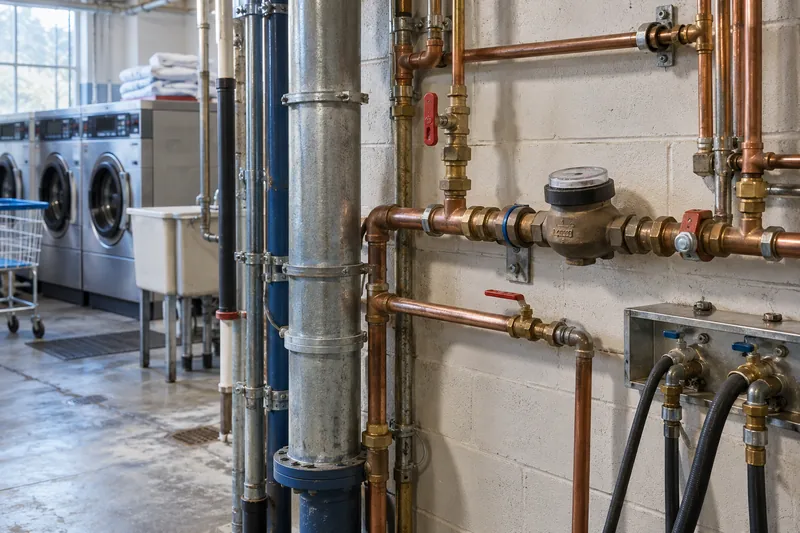
Laundromats are among the most energy-intensive retail businesses per square foot. Commercial washers fill and heat large water volumes repeatedly throughout the day. Dryers run high-powered heating elements for extended cycles. Lighting, water heating, and HVAC add to a base load that runs from opening to close, seven days a week, 52 weeks a year. This isn't a small-business utility profile — it's closer to a small manufacturing operation.
Read the actual utility bills and tariffs
Measure consumption from the actual billing periods and installed equipment specifications. Verify billing units, wash formulas, non-vend use, fixed charges and the applicable tariff. A generic savings percentage or gallons-per-cycle assumption cannot establish this store’s expense, revenue or upgrade payback.
Why Traditional Cost-Cutting Isn't Enough
Operators who respond to rising utilities by reducing hours, deferring maintenance, or skimping on hot water temperatures are trading short-term cost savings for long-term business degradation. Customers notice when machines aren't cleaning effectively. Reducing hours cuts revenue faster than it cuts costs. The sustainable response to structural utility cost pressure is capital investment in efficiency — not operational compromise.
State Incentives for Green Business in Illinois
Federal Investment Tax Credit (ITC): 30% Off Solar
Illinois Shines: Solar Renewable Energy Credits
ComEd and Ameren Energy Efficiency Rebates
SBA Green Lending and USDA REAP Grants
For an SBA-backed acquisition, confirm the current program rules and the lender’s written conditions for this borrower and transaction. The individual loan maximum, combined borrowing policy, required equity and treatment of seller debt are distinct questions. A lender must approve the complete uses-of-funds and repayment structure.
Implementing Solar and High-Efficiency Water Systems
Understanding the incentives is the beginning. The implementation decisions — what to install, in what sequence, with what contractors — determine whether the investment actually delivers its projected returns.
Build a site-specific solar decision
These numbers work. They're not worst-case projections — they're realistic estimates based on Illinois's utility rates and solar production profiles for the Chicago metro and downstate markets. The investment pays back faster with each annual electricity rate increase, which is why operators who install solar now capture better economics than those who wait.
High-Efficiency Commercial Washers: Water and Energy Together
High-Efficiency Water Heating Systems
Marketing Your Eco-Friendly Brand to Gen Z
The operational case for green technology stands on its own. The marketing case — reaching a customer segment that actively values environmental responsibility — is a meaningful secondary benefit for operators in the right demographics.
Gen Z's Environmental Decision-Making
Evaluate the full occupancy obligation using the signed lease, amendments and additional-rent history. Include known escalations and repair responsibilities, then test the store’s cash flow after planned labor and financing. No universal rent ratio makes an uncertain assignment or renewal right acceptable.
Certification and Credentialing
Illinois operators who've completed meaningful green investments can pursue formal recognition that adds credibility to marketing claims. ENERGY STAR certification for commercial buildings, which requires meeting specific energy performance benchmarks, provides a third-party verified credential. Illinois' Green Business Program, administered through local chambers of commerce and the Illinois Department of Commerce, offers a Green Business certification that can be prominently marketed. These credentials convert investment in efficiency into marketable competitive advantages that competitors can't claim without making the same investments.
Communicating Green Credentials Without Greenwashing
Frequently Asked Questions: Solar and Green Tech for Illinois Laundromats
Does solar actually make financial sense for an Illinois laundromat?
What's the minimum lease term I need before solar installation makes sense?
Are there Illinois-specific solar incentives beyond the federal ITC?
What's the most cost-effective first green investment for a laundromat?
Does a solar installation increase a laundromat's sale value?
Distinguish advertised asking terms from completed reported transactions. Review the national historical benchmark in the valuation guide, then assess the particular lease, documentation, labor requirements and deferred equipment spending. The price of another store cannot be applied without those differences.
How do I find qualified solar contractors for a commercial laundromat installation?
Can I install solar if I lease my laundromat space rather than own the building?
Yes, but it requires your landlord's explicit written consent and a lease amendment covering the installation, ownership, maintenance, and end-of-lease disposition of the system. Many landlords are receptive to solar installations (especially when the building benefits from the improved property value), but the negotiation is essential before any contractor engagement. Some operators structure arrangements where the landlord owns the system and provides the tenant with a discounted electricity rate — a solar lease or PPA structure that requires no upfront capital.
Evaluating a Laundromat's Utility Cost Profile?
When evaluating any Illinois laundromat acquisition, utility cost analysis is a critical component of due diligence. Illinois Laundry Broker helps buyers understand the utility cost profile of acquisition targets — including solar upgrade potential — so you can accurately model true operating costs and identify value-creation opportunities on day one.
Talk to a BrokerSustainability That Pays for Itself
The most compelling thing about solar and green technology investment in Illinois laundromats isn't the environmental story — it's the financial one. These investments reduce costs, improve margins, qualify for meaningful incentives, and build competitive moats that price-competing operators can't match without making the same commitments.
Illinois's rising utility rates have transformed green technology from a nice-to-have into a financial imperative for operators thinking five or more years ahead. The operators who act on this now — while incentive programs are robust and contractor capacity is available — will compound the savings over years while competitors continue watching their margins erode.
If you're considering an Illinois laundromat acquisition and want to understand the utility cost profile of a specific target — or if you're an existing operator ready to evaluate solar and efficiency investments — connect with Illinois Laundry Broker. We've seen the utility bills on hundreds of Illinois stores and can help you separate the high-efficiency opportunities from the money pits.
Word count: 2,714
Separate efficiency work from a solar proposal
Model the project without assuming that every advertised incentive or export credit applies. Have qualified advisers verify current program eligibility, tax treatment and transfer provisions. A seller should disclose remaining financing and service obligations so a buyer can distinguish owned improvements from a contract that continues after closing.
Sources and review notes
Reviewed October 15, 2026. Primary references support the specific topics below. Practical checklists and explicitly labeled scenarios are our editorial analysis, not reported market outcomes.
- Speed Queen: model-specific front-load washer specification sheet
An example of model-specific published cycle consumption; do not apply one model’s specification to an entire store. - U.S. Department of Energy: commercial clothes washers
Defined equipment categories, standards and rulemaking status; not a promise of savings for a particular installation. - U.S. Department of Energy: water-intensive processes
Water-efficiency practices; application and savings depend on the installed equipment and operation. - CISA: cybersecurity for small and medium businesses
Business cybersecurity planning, software updates and access controls; relevant to remote monitoring and connected systems.
Use this material to prepare questions and documents. A specific transaction needs its own legal, tax, lending and equipment review.
Thinking about selling your laundromat?
Start with a private conversation about your records, lease, equipment and timing. You do not need to have a price in mind.
Discuss your next step