Ask the broker to explain the engagement, compensation, confidentiality process and division of responsibilities. Discuss how potential buyers are qualified, what evidence supports an opinion of value and how conflicting information will be corrected during diligence.
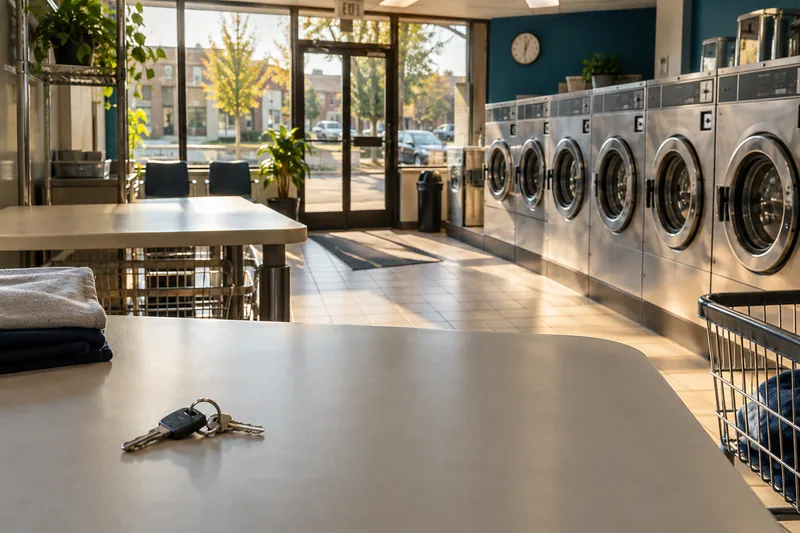
A laundromat business broker is a specialized professional who facilitates the buying and selling of laundromat businesses — handling everything from business valuation and marketing to buyer qualification, negotiation, and transaction management. But that one-sentence description doesn't begin to capture the actual value a great broker provides. In a transaction involving hundreds of thousands of dollars, dozens of moving parts, and real financial consequences for every decision made, the difference between working with a knowledgeable, specialized broker and going it alone can be tens of thousands of dollars — and the difference between a deal that closes cleanly and one that falls apart at the finish line.
This guide explains exactly what a laundromat business broker does, how they protect both buyers and sellers, the signs that you need one, and how to identify the right broker for your specific transaction in Illinois.
What Is a Laundromat Business Broker? The Expert Guide Every Buyer and Seller Needs
A laundromat business broker occupies a specific niche at the intersection of business brokerage and specialized industry expertise. While general business brokers facilitate the sale of many types of businesses, a broker who specializes in laundromats brings a depth of knowledge about this specific industry — its valuation methods, operating economics, equipment considerations, and market dynamics — that generalist brokers typically lack.
Core Functions of a Laundromat Business Broker
For Sellers:
- Business valuation: Determining a market-appropriate asking price based on verified SDE, equipment condition, lease terms, and comparable sales
- Confidential marketing: Reaching qualified buyers without exposing the sale to employees, suppliers, or competitors
- Buyer pre-qualification: Screening potential buyers for financial capability before allowing access to sensitive business information
- Negotiation support: Guiding price, terms, and contingency negotiations with buyer interest in mind
- Transaction management: Coordinating due diligence, financing, legal review, and closing logistics
For Buyers:
- Deal sourcing: Access to listed and off-market laundromat opportunities that don't appear on general business listing sites
- Financial analysis: Help interpreting financial statements, verifying revenue claims, and understanding the true economics of a target business
- Due diligence guidance: Structuring and managing the due diligence process to protect the buyer's interests
- Market context: Benchmarking the opportunity against comparable Illinois transactions to ensure fair pricing
- Professional network: Connections to SBA lenders, attorneys, accountants, and equipment inspectors experienced in laundromat transactions
What Sets a Laundromat Specialist Apart from a General Business Broker
The defensible price is the one supported by verified earnings, transferable premises rights and the equipment obligations a buyer will inherit. Keep business value separate from real estate and explain capital needs without counting the same expense twice. A headline multiple is a starting question, not an appraisal.
How a Laundromat Business Broker Saves You Time, Money, and Costly Mistakes
The most common objection to working with a broker is cost — sellers worry about the commission, buyers wonder if they're adding unnecessary expense. The reality, documented across thousands of small business transactions, is that professional broker involvement consistently results in better financial outcomes for both parties.
For Sellers: Higher Sale Price and Faster Close
Build the forecast from documented receipts, contracts and operating costs, with a clearly labeled base case and downside case. Deduct replacement labor, sustainable capital needs and scheduled financing when assessing owner cash. An industry headline cannot substitute for the store’s own records or justify an unverified growth assumption.
For Buyers: Better Deals and Avoided Disasters
Evaluate the full occupancy obligation using the signed lease, amendments and additional-rent history. Include known escalations and repair responsibilities, then test the store’s cash flow after planned labor and financing. No universal rent ratio makes an uncertain assignment or renewal right acceptable.
Time and Administrative Burden
A laundromat transaction involves dozens of documents, multiple professional parties (lenders, attorneys, accountants, equipment inspectors), a complex timeline, and constant communication management. For buyers and sellers who have jobs, families, and other commitments, this is an overwhelming administrative burden. A broker manages this entire process — keeping the transaction on track, managing timelines, communicating between parties, and handling the administrative complexity that otherwise falls on the principals.
Top Signs You Need a Laundromat Business Broker Before Buying or Selling
Not every transaction requires a broker — but almost every significant one does. Here are the clearest signals that professional broker representation is essential for your situation.
Signs You Need a Broker as a Seller
- You don't know how to value your business accurately
- You can't afford for competitors or employees to learn your business is for sale
- You've had interested buyers but deals keep falling through before closing
- You're unsure how to structure the financial presentation of your business
- Your last sale attempt produced no qualified buyers despite months of effort
- You've never sold a business before and don't know what "market terms" look like
Signs You Need a Broker as a Buyer
- You can't find laundromat listings that match your criteria on public sites
- You're not sure how to verify whether a seller's revenue claims are honest
- You've looked at multiple laundromats but can't tell which is a fair deal
- You don't have established relationships with SBA lenders or transaction attorneys
- You're buying in a market where you have limited local knowledge
- You've already made an offer that was rejected and don't understand why
How to Choose the Right Laundromat Business Broker: What to Look for and Questions to Ask
Not all brokers are equal, and the stakes are high enough that broker selection deserves real consideration. Here's how to evaluate and choose the right laundromat broker for your Illinois transaction.
Essential Qualities to Look for in a Laundromat Broker
- Laundromat-specific experience: How many laundromat transactions have they closed? In what markets? What was the average transaction size?
- Illinois market knowledge: Do they understand the specific dynamics of the Illinois laundromat market — urban, suburban, and downstate?
- Verified references: Can they provide buyer and seller references from recent transactions who will speak candidly about the experience?
- Financial analysis capability: Can they explain SDE calculations, DSCR analysis, and the water bill verification method without hesitation?
- Professional network: Do they have established relationships with SBA lenders, commercial real estate attorneys, and equipment inspectors?
- Communication style: Do they respond promptly, explain things clearly, and seem genuinely invested in your outcome?
Questions to Ask a Potential Laundromat Broker
- How many laundromat transactions have you closed in the last 2 years, and in what price range?
- How do you verify a laundromat's revenue claims beyond tax returns?
- What is your marketing approach for seller listings, and how do you maintain confidentiality?
- How do you help buyers evaluate whether a deal is fairly priced?
- What is your fee structure and when are fees paid?
- Make the decision from the actual operating records and transaction terms. Record the assumptions, identify the supporting documents and test the effect of a less favorable outcome. Keep an illustrative possibility separate from a documented result or a promise about what a buyer or seller will achieve.
- A useful broker process helps the parties organize decisions and communications; it does not replace professional legal, tax, lending or mechanical review. Know who represents whom and what services are included before sharing a full financial package or signing a representation agreement.
The answers to these questions will quickly differentiate a specialist from a generalist — and an experienced professional from someone learning on your deal. Illinois Laundry Broker's team has deep roots in the Illinois laundromat market, verified transaction experience, and a professional network built specifically for laundromat transactions. Learn more about our full range of services for buyers and sellers.
Frequently Asked Questions: Laundromat Business Brokers
How much does a laundromat business broker charge?
Distinguish advertised asking terms from completed reported transactions. Review the national historical benchmark in the valuation guide, then assess the particular lease, documentation, labor requirements and deferred equipment spending. The price of another store cannot be applied without those differences.
Can I sell my laundromat without a broker?
Yes — but most For Sale By Owner laundromat transactions either take significantly longer, close at lower prices, or fall through entirely. Without professional marketing, buyer screening, deal management, and negotiation support, FSBO sellers face significant challenges. If you have prior business sale experience and strong local buyer relationships, FSBO may work. For most owners, professional representation delivers substantially better outcomes.
Does a broker represent the buyer or the seller?
Most laundromat brokers are listing brokers (representing the seller), though they have an obligation to treat all parties fairly. Buyers can request buyer representation agreements with some brokers. Illinois Laundry Broker works with both buyers and sellers, bringing expertise to every transaction while clearly defining representation responsibilities from the outset.
How do I find an Illinois laundromat broker?
Searching for an Illinois laundromat broker online is a good start, but verify their industry experience specifically. Ask for laundromat transaction references, not just general business sale experience. Illinois Laundry Broker specializes exclusively in Illinois laundromat transactions and can be reached directly through our contact page.
What is the difference between a business broker and a business advisor?
A business broker typically facilitates transactions (buying and selling), while a business advisor may provide strategic consulting without necessarily facilitating a transaction. Some professionals serve both roles. For laundromat owners considering a sale, working with someone who can provide both advisory guidance on timing and preparation AND transaction execution is the most efficient approach.
How long does it take a broker to sell a laundromat?
In a Complex Transaction, Expertise Pays
A laundromat business transaction is one of the most significant financial events in most owners' lives and in most buyers' investment journeys. The complexity of valuation, due diligence, financing, lease management, and negotiation demands professional expertise — not generalist advice, and not navigating alone.
The right laundromat business broker is a genuine partner: someone who understands the industry's specific economics, knows the Illinois market dynamics, has relationships with the right professionals, and is personally invested in helping you achieve your transaction goals. When the stakes are this high, specialization isn't a luxury — it's a necessity.
Whether you're a buyer looking for your first Illinois laundromat or a seller who's ready to exit after years of building a successful business, the team at Illinois Laundry Broker is here to guide you through every step of the process with experience, transparency, and results.
Word count: 2,727
Set expectations for representation
A useful broker process helps the parties organize decisions and communications; it does not replace professional legal, tax, lending or mechanical review. Know who represents whom and what services are included before sharing a full financial package or signing a representation agreement.
Sources and review notes
Reviewed October 15, 2026. Primary references support the specific topics below. Practical checklists and explicitly labeled scenarios are our editorial analysis, not reported market outcomes.
- IRS: Form 8594, asset acquisition statement
Buyer/seller reporting for applicable asset acquisitions and purchase-price allocation. - SBA: 7(a) loan program
Program purposes, eligibility and the individual 7(a) loan maximum. - BizBuySell: reported sold laundromat valuation benchmarks, 2021–2025
National reported transactions; asking and sold figures are separate. These are historical category benchmarks, not Illinois-specific comparable sales.
Use this material to prepare questions and documents. A specific transaction needs its own legal, tax, lending and equipment review.
Thinking about selling your laundromat?
Start with a private conversation about your records, lease, equipment and timing. You do not need to have a price in mind.
Discuss your next step