Before adding another location, document how collections, expenses, maintenance, staff permissions and customer issues are handled without the owner being present at every decision. Produce separate store-level operating statements so a strong site does not conceal a weak acquisition.
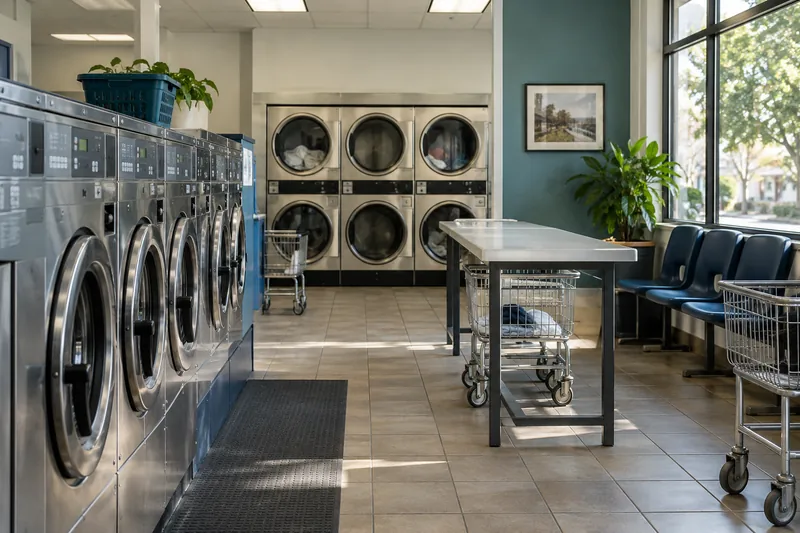
There's a specific moment that every successful laundromat portfolio owner in Illinois can pinpoint — the exact afternoon they stopped thinking like a business owner and started thinking like a business architect. For one Naperville operator I spoke with, it happened while unclogging a drain at location two while her husband fielded a plumbing emergency at location one. "I realized," she told me, "that I had built two jobs, not two businesses."
That realization — and the systems she built afterward — is how she went from two stressed-out locations to six reliably profitable ones across DuPage and Will counties over the next four years. Her story isn't unique. The Chicago suburbs are quietly becoming one of the best environments in the country for laundromat portfolio building, driven by population density, rising renter demographics, and a wave of aging single-location owners ready to sell. But moving from one to many requires more than capital. It requires a complete overhaul of how you think about your role in the business.
This guide covers the full playbook: the mindset shift, the geographic intelligence you need to identify winning suburban markets, the operational infrastructure that makes scale possible, and the financing pathways that let you grow without burning through personal reserves.
The Mindset Shift: From Owner to Operator to Architect
Most first-time laundromat buyers arrive with a hands-on orientation. They learn the machines, handle customer complaints personally, manage coins or card systems directly, and pride themselves on knowing every inch of their store. This is exactly the right approach for location one. Understanding the operation at ground level is essential before you can delegate it effectively.
The mistake most owners make is applying that same approach to location two. They hire a part-time attendant, add a second commute, and double their personal workload. Within six months they're exhausted, and neither location gets the attention it deserves. This is the "owner's trap" of multi-location business ownership, and it's responsible for more failed expansion attempts than any financial issue.
The transition requires thinking in three distinct phases:
Phase 1 — Systemize Location One First
Before acquiring a second location, your first store needs to run without you for a week. That means documented SOPs for every function (opening, closing, machine maintenance checks, cash reconciliation, customer issue escalation), a reliable attendant or manager who can execute those SOPs, remote monitoring via camera and payment data, and a maintenance vendor on a service contract. If your location one would fall apart in your absence, adding location two will accelerate that failure, not solve it.
Phase 2 — Hire for Gaps, Not for Tasks
When most operators hire, they think in tasks: "I need someone to clean on Tuesdays." Portfolio thinkers hire for capability gaps: "I need someone who can manage vendor relationships across multiple locations." As you scale, your hiring should move toward roles that create leverage — an operations manager who handles all three stores, a bookkeeper who tracks all location P&Ls in a unified dashboard, a maintenance coordinator who schedules preventive service across your portfolio.
Phase 3 — Build the Architecture, Then Execute
By location four or five, your job is no longer operations. It's capital allocation, market analysis, relationship management with landlords and brokers, and strategic decisions about when to acquire, improve, or eventually sell specific assets. The operators who struggle at scale are the ones still thinking about which detergent dispensers to install rather than which neighborhoods offer the best acquisition metrics.
Identifying High-Growth Pockets in Northern Illinois
The Chicago metropolitan area contains 77 cities with populations over 10,000, and not all of them represent equal opportunity for laundromat investment. The art of portfolio geography — selecting which suburban markets to concentrate in — is arguably the most important skill in multi-location strategy. A great operator in the wrong market will underperform a mediocre operator in the right one.
For laundromat portfolio building specifically, the indicators that matter most are:
Renter Density and Housing Stock Age
Laundromats thrive where renters live, particularly in older multi-family housing built before in-unit washer/dryer became standard. The suburbs with the highest concentrations of pre-1980 rental units include Waukegan, North Chicago, Elgin, Aurora, Joliet, Cicero, and Berwyn. These markets also tend to have lower acquisition costs due to older, less renovated existing stores — creating value-add opportunity for buyers willing to modernize.
The northern collar counties (Lake, McHenry) are adding rental density faster than their infrastructure is catching up. New apartment development in Gurnee, Mundelein, and Libertyville is creating underserved demand in areas where the existing laundromat stock is thin. This is "greenfield" opportunity: markets where the customer base is growing faster than the supply of quality laundromats.
The "Coverage Gap" Analysis
Before acquiring in any market, map every existing laundromat within a 2-mile radius of your target address. Tools like Google Maps, Yelp, and the Illinois Secretary of State business database can help. Look for gaps where the nearest competition is more than 0.75 miles away and the rental density within that gap exceeds 500 units. Those gaps represent captive markets with underserved demand — often the product of a laundromat closure or a neighborhood that developed faster than the laundry infrastructure.
Municipal Growth Indicators
Track building permit data for the suburbs you're watching. Municipalities issuing high volumes of multi-family permits (anything over 200 units in a 12-month period) are generating future laundromat customers. Illinois municipalities publish permit data through their planning departments, and services like CoStar aggregate this regionally. A suburb issuing apartment permits today is a laundromat acquisition target in two to three years.
For context: Illinois laundry market data shows that the southwestern suburbs (Bolingbrook, Romeoville, Plainfield) are experiencing particularly strong multifamily growth driven by Amazon fulfillment center employment, creating a blue-collar renter base that historically skews heavily toward laundromat use.
Franchise vs. Independent: The Portfolio Calculus
Evaluate the full occupancy obligation using the signed lease, amendments and additional-rent history. Include known escalations and repair responsibilities, then test the store’s cash flow after planned labor and financing. No universal rent ratio makes an uncertain assignment or renewal right acceptable.
Centralizing Operations for Maximum Efficiency
The operational infrastructure that allows a single owner to manage five to ten laundromat locations without losing their mind is built around three pillars: unified technology, standardized physical environments, and layered human oversight.
The Technology Stack for Multi-Location Management
Modern card-based or app-based payment systems (LaundryCard, Hercules, WASH Connect) are non-negotiable for portfolio operators. These platforms provide centralized dashboards showing real-time revenue, machine utilization, and vend counts across all locations from a single login. When machine 7 at your Elgin location drops below normal cycle counts, you see it in the dashboard before the attendant even notices.
Layer in remote camera access for all locations, connected to a monitoring system you can check from your phone, and you have eyes-everywhere visibility without physical presence. Many portfolio operators use cameras strategically — positioned over cash drawers, change machines, and entry points — not just for security but to verify that opening and closing procedures are being followed.
Maintenance management platforms like ServiceChannel or even a well-built Airtable database can track every machine's service history across your portfolio. When your DuPage locations are on a shared service contract with Speed Queen or Maytag Commercial, centralized maintenance data lets you negotiate better terms based on your full equipment volume.
Standardization as a Competitive Advantage
Every location in your portfolio should look, feel, and operate on the same systems — same POS platform, same machine brand families (so parts are interchangeable), same cleaning schedule format, same customer communication scripts. Standardization seems limiting, but it's actually what creates freedom. When every location runs identically, you can move an attendant from your Naperville store to cover a shift in Downers Grove without retraining. You can diagnose a revenue anomaly in minutes because the data structure is identical across stores.
This is one area where absentee ownership and active portfolio management align: the systems that let a distant owner manage one location remotely are the same systems that let a nearby owner manage five locations without chaos.
The Manager Layer
Use an equipment-level inventory, service history and installed-cost quotes to evaluate the proposal. Track the effect on availability, repair response and customer use rather than assuming a standard revenue lift or repair saving. Retain evidence of the results a buyer will actually inherit.
Build staffing from the actual tasks, coverage requirements and market quotes for the work. Include owner responsibilities that will need to be replaced after closing. The distinction between SDE and managed-store cash flow matters more than a generic promise of low owner hours.
Financing Your Expansion Through Portfolio Equity
One of the most powerful — and underutilized — aspects of laundromat portfolio building is that your existing locations fund your future acquisitions. Once location one is performing well, its appraised value and documented cash flow become borrowing power for location two. Location two adds to that base. By location three or four, you've built a self-reinforcing equity engine that most other small business categories can't match.
SBA 7(a) Portfolio Financing
The SBA 7(a) program remains the dominant financing vehicle for laundromat acquisitions in Illinois, and it scales effectively for multi-location buyers. Lenders who specialize in laundromat SBA deals (and there's a meaningful subset of them in Chicago's lending market) will look at your existing portfolio as both collateral and evidence of operational competence. A buyer with two profitable locations applying for a third acquisition is a far more attractive credit profile than a first-time buyer — expect this to show up in both approval rates and interest rate spreads.
For an SBA-backed acquisition, confirm the current program rules and the lender’s written conditions for this borrower and transaction. The individual loan maximum, combined borrowing policy, required equity and treatment of seller debt are distinct questions. A lender must approve the complete uses-of-funds and repayment structure.
Cash-Out Refinancing on Stabilized Locations
This strategy is most effective when the market you're refinancing in has strong comparable sales data — which is where a broker's knowledge of Illinois laundromat transaction multiples becomes valuable. If recent comps support a higher valuation than your lender's initial appraisal, the right comparable data can meaningfully increase your refinance proceeds.
Seller Financing as a Portfolio Tool
Make the decision from the actual operating records and transaction terms. Record the assumptions, identify the supporting documents and test the effect of a less favorable outcome. Keep an illustrative possibility separate from a documented result or a promise about what a buyer or seller will achieve.
For portfolio builders, seller financing is additive: each acquisition that includes seller financing frees up more of your liquid capital for the next deal. Over a portfolio of five acquisitions, strategic use of seller financing might fund the equivalent of an entire additional location. Financing options for laundromat purchases covers the full spectrum including seller notes, equipment financing, and conventional bank loans.
Portfolio Valuation and the Institutional Exit
Distinguish advertised asking terms from completed reported transactions. Review the national historical benchmark in the valuation guide, then assess the particular lease, documentation, labor requirements and deferred equipment spending. The price of another store cannot be applied without those differences.
Use a multiple only after identifying the income measure, the included assets and the comparison period. National reported sold-business benchmarks are useful context, but they do not establish a city-specific price or real-estate cap rate. Compare the underlying earnings definitions before drawing a conclusion.
For a detailed view of how Illinois laundromat ROI compounds across a portfolio, walk through the projections with a broker who understands both acquisition economics and eventual exit strategy.
Practical Timelines and Realistic Expectations
No honest guide to portfolio scaling would skip the timeline reality check. Here's what operators in the greater Chicago area who've successfully built portfolios of five or more locations typically report:
The operators who try to compress this timeline — acquiring three locations in 18 months before systems are in place — are the ones who appear in cautionary tales. The ones who follow a disciplined sequence build wealth that compounds for decades.
FAQ: Scaling Laundromats in the Chicago Suburbs
How many locations can one person realistically manage?
Should I focus on one suburb or spread across multiple?
What's the minimum cash flow a location should generate before I acquire a second?
The defensible price is the one supported by verified earnings, transferable premises rights and the equipment obligations a buyer will inherit. Keep business value separate from real estate and explain capital needs without counting the same expense twice. A headline multiple is a starting question, not an appraisal.
How do I find laundromats for sale in the Chicago suburbs?
Work with a broker who specializes in Illinois laundromat transactions and has an active deal pipeline. Most quality deals — particularly off-market ones from owners who aren't ready to list publicly — come through broker relationships, not online listing platforms.
Can I use a 1031 exchange when selling one location to fund another?
If the laundromat real estate is owned (not leased), a 1031 exchange can defer capital gains taxes on the sale and roll equity into a replacement property. Equipment and business goodwill typically don't qualify, but the real estate component often does. Consult a 1031-experienced CPA and attorney before structuring any transaction this way.
What's the biggest operational mistake portfolio owners make?
Trying to manage multiple locations with the same informal, personal approach that works for one. Systems, documentation, and layered oversight aren't bureaucracy — they're what makes scale sustainable. The operators who resist systematizing are the ones who plateau at two or three locations and never break through.
How do I know when to stop acquiring and start optimizing?
When the incremental time cost of managing one more location exceeds the financial benefit, or when your balance sheet is fully extended, it's time to optimize the portfolio you have rather than expand it. Increasing revenue per location (through wash-dry-fold, delivery, or upgraded equipment) often creates more value than acquiring additional average locations.
Ready to Map Your Portfolio Strategy?
Building a laundromat portfolio across the Chicago suburbs is one of the most reliable wealth-building paths available to Illinois entrepreneurs — but it requires a clear acquisition strategy, the right financing structure, and access to off-market deals before they hit public listings.
As a licensed Illinois business broker specializing in laundromat transactions, I work with portfolio builders at every stage — from analyzing whether location one is ready to support acquisition two, to structuring five-location portfolio sales for institutional buyers. Let's build your expansion roadmap together.
Conclusion
Scaling from one laundromat to a Chicago suburbs portfolio isn't a matter of doing the same thing more times. It's a fundamental reinvention of your role, your systems, and your mindset. The operators who successfully build ten-location portfolios aren't necessarily the ones who worked hardest at location one — they're the ones who learned fastest, systematized earliest, and understood that growth is an architecture problem, not an effort problem.
The Chicago suburbs offer exceptional conditions for this kind of portfolio building in 2026: underserved suburban markets, a wave of aging single-location sellers, strong SBA lending infrastructure, and a population density that makes laundromat economics work in market after market. The playbook is here. The capital sources exist. The missing piece, for most aspiring portfolio owners, is the strategic clarity to execute it in sequence.
Article word count: approximately 2,780 words.
Expand only after the first store has repeatable controls
Model travel and supervision as real costs. Compare each proposed lease and equipment condition independently rather than applying one portfolio multiple to dissimilar stores. A larger footprint can spread administrative work, but it can also concentrate guarantees, liquidity needs and unresolved operational problems.
Sources and review notes
Reviewed October 15, 2026. Primary references support the specific topics below. Practical checklists and explicitly labeled scenarios are our editorial analysis, not reported market outcomes.
- IRS: Publication 334, tax guide for small business
Business recordkeeping, income and expense treatment; owner distributions are not automatically an expense add-back. - CISA: cybersecurity for small and medium businesses
Business cybersecurity planning, software updates and access controls; relevant to remote monitoring and connected systems. - U.S. Department of Energy: water-intensive processes
Water-efficiency practices; application and savings depend on the installed equipment and operation.
Use this material to prepare questions and documents. A specific transaction needs its own legal, tax, lending and equipment review.
Thinking about selling your laundromat?
Start with a private conversation about your records, lease, equipment and timing. You do not need to have a price in mind.
Discuss your next step