Calculate occupancy cost using base rent plus the additional charges the lease actually assigns to the tenant. Compare like periods of verified revenue. A ratio based only on base rent can hide significant property costs, and a ratio based on a seller’s best month can overstate affordability.
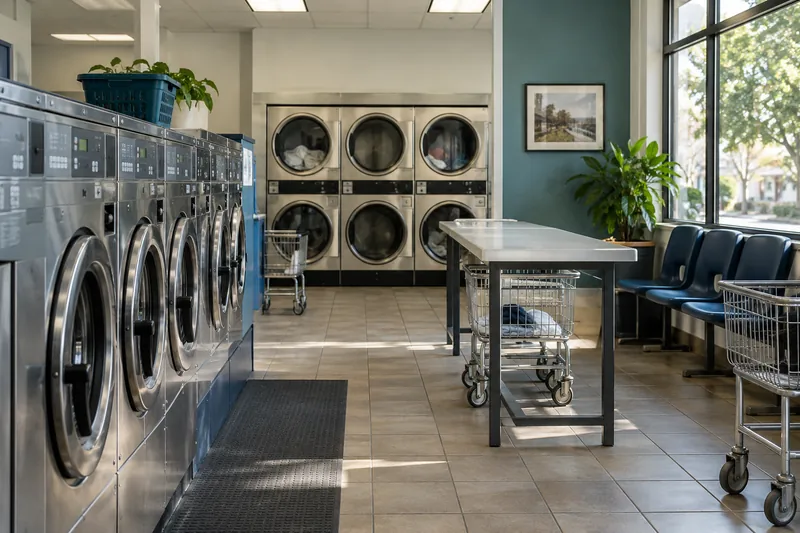
Buyers obsess over a laundromat's revenue and its equipment, and they should. But there's a quieter number that has ended more deals — and ruined more otherwise-good stores — than either: the rent-to-revenue ratio. Because most laundromat owners lease their space, rent is a large, fixed, unavoidable cost. Get it wrong and no amount of hustle on the floor will save the investment. Get it right and a modest store can throw off reliable profit for years.
This guide explains exactly what the ratio is, what's healthy versus dangerous, how lease escalations silently erode profitability over time, and what to do when you find a store you love attached to a lease you don't. It's a companion to our broader guide on understanding laundromat lease agreements.
What the Rent-to-Revenue Ratio Is and Why It's Decisive
The Definition
The rent-to-revenue ratio is your total annual occupancy cost divided by your annual gross revenue, expressed as a percentage:
Rent-to-revenue ratio = (Total annual occupancy cost ÷ Annual gross revenue) × 100
The critical detail most first-time buyers miss: use total occupancy cost, not just base rent. That means adding common-area maintenance (CAM), your share of property taxes and insurance, and any other pass-through charges the lease makes you responsible for. A lease with modest base rent but heavy CAM and tax pass-throughs can carry a far higher true occupancy cost than it first appears.
Why It's Decisive
Rent is a fixed cost. Utilities scale somewhat with usage, supplies scale with volume, and you can adjust labor — but rent is due in full whether the store had a great month or a terrible one. That rigidity is what makes the ratio so important: it tells you how much of every dollar the store earns is spoken for before you pay for anything else. The higher the ratio, the thinner your cushion and the more vulnerable you are to any dip in revenue. Model it directly into your ROI analysis — it's often the difference between a healthy return and a break-even grind.
The Healthy Range and the Danger Zone
There's no single magic number, because it interacts with the store's other costs, but experienced operators and brokers use rough benchmarks:
- Evaluate the full occupancy obligation using the signed lease, amendments and additional-rent history. Include known escalations and repair responsibilities, then test the store’s cash flow after planned labor and financing. No universal rent ratio makes an uncertain assignment or renewal right acceptable.
- Build the forecast from documented receipts, contracts and operating costs, with a clearly labeled base case and downside case. Deduct replacement labor, sustainable capital needs and scheduled financing when assessing owner cash. An industry headline cannot substitute for the store’s own records or justify an unverified growth assumption.
Always calculate the ratio on verified revenue, not the seller's claim — an inflated revenue figure makes the rent ratio look artificially healthy. This is one more reason to run the checks in our revenue verification guide and the water bill test before you trust any percentage.
How Lease Escalations Erode the Ratio Over Time
Here's the trap that catches buyers who only look at today's numbers: a ratio that's healthy at purchase can drift into the danger zone over the life of the lease if rent rises faster than revenue.
The Escalation Math
Percentage Rent and Other Landmines
Watch for lease provisions that make the burden worse: percentage-rent clauses (where the landlord takes a share of revenue above a threshold), uncapped CAM pass-throughs, and personal-guarantee terms. A landlord who also owns the shopping center's other tenants — or a competing laundromat — is another risk factor worth flagging. Our lease agreement guide covers these clauses in detail.
Remaining Term Matters as Much as the Rate
Even a perfect ratio is worth little on a lease with two years left and no renewal option. A laundromat's equipment and customer base are tied to the location; if you could lose the space in 24 months, the whole investment is at risk. Prioritize stores with substantial remaining term or strong, clearly-defined renewal options — ideally enough runway to comfortably outlast your financing.
Renegotiating, Walking, and Worked Illinois Examples
When the Ratio Is Too High: Your Options
- Renegotiate before closing. A purchase is a natural moment to negotiate lease terms, because the landlord wants a stable new tenant. A broker can help you (or your attorney) seek a longer term, a rent reduction, capped escalations, or a cap on CAM as a condition of the deal.
- Reprice the business. If the rent is high but fixed, the store is simply worth less. Use the elevated occupancy cost to justify a lower purchase price under our valuation framework — you're being compensated for the burden you're inheriting.
- Walk away. Sometimes the lease is the deal-killer, and the right move is to pass. A great store on a bad lease is still a bad investment, and there will be other stores.
Two Illustrative Examples
Not Sure If a Laundromat's Rent Is a Deal-Breaker?
The rent-to-revenue ratio is easy to calculate but easy to get wrong if you miss CAM charges, escalations, or a short remaining term. I help Illinois buyers analyze the lease alongside the financials — and, when it makes sense, renegotiate terms as a condition of the purchase.
Frequently Asked Questions
What is a good rent-to-revenue ratio for a laundromat?
How do you calculate the ratio?
Divide total annual occupancy cost — base rent plus CAM, taxes, and other pass-throughs — by verified annual gross revenue, then multiply by 100. Using base rent alone understates the true burden.
Can a lease make a good store unprofitable?
Yes. Because rent is fixed, an excessive ratio or aggressive escalations can turn a busy, well-located store into a money-loser over the life of the lease. That's why the lease deserves as much scrutiny as the revenue.
Should I always avoid stores with high rent ratios?
Not necessarily — but you should reprice for it or renegotiate. A high, fixed rent means the business is worth less, so it should command a lower purchase price. If the rent can be renegotiated as part of the deal, a high-ratio store can sometimes be turned into a good one.
How much lease term should remain when I buy?
Enough to comfortably outlast your financing and protect your equipment investment — many buyers look for a remaining term (including firm renewal options) well beyond their loan term. A short remaining lease with no renewal is a serious risk regardless of how good the ratio looks today.
Use total occupancy cost and the lease calendar
Project known escalations, option terms and likely responsibility for repairs. Then test the business after replacement labor, capital reserves and debt service. No universal rent percentage can make a short, nonassignable or poorly understood lease acceptable.
An illustrative occupancy-cost test
Assume monthly base rent of $4,000, additional occupancy charges of $500 and verified monthly revenue of $30,000. Total occupancy of $4,500 divided by $30,000 is 15%. If revenue falls to $25,000 with the same occupancy cost, the ratio rises to 18%. These are hypothetical inputs, not healthy or unhealthy industry thresholds.
The ratio is only the opening question. Inspect the lease term, escalations, option rights, repair obligations and transfer conditions. Then model utilities, labor, maintenance, capital needs and financing. A manageable-looking percentage cannot cure an operating-rights problem or establish how much cash the owner will retain.
Sources and review notes
Reviewed October 15, 2026. Primary references support the specific topics below. Practical checklists and explicitly labeled scenarios are our editorial analysis, not reported market outcomes.
- IRS: Publication 334, tax guide for small business
Business recordkeeping, income and expense treatment; owner distributions are not automatically an expense add-back. - Speed Queen: model-specific front-load washer specification sheet
An example of model-specific published cycle consumption; do not apply one model’s specification to an entire store. - SBA: 7(a) loan program
Program purposes, eligibility and the individual 7(a) loan maximum.
Use this material to prepare questions and documents. A specific transaction needs its own legal, tax, lending and equipment review.
Thinking about selling your laundromat?
Start with a private conversation about your records, lease, equipment and timing. You do not need to have a price in mind.
Discuss your next step