This guide and the city directory provide research context; they are not a feed of verified available listings. A national sold-business benchmark describes its reported sample, while a current advertised listing describes a seller’s asking terms. Neither is a complete survey of Illinois transactions.
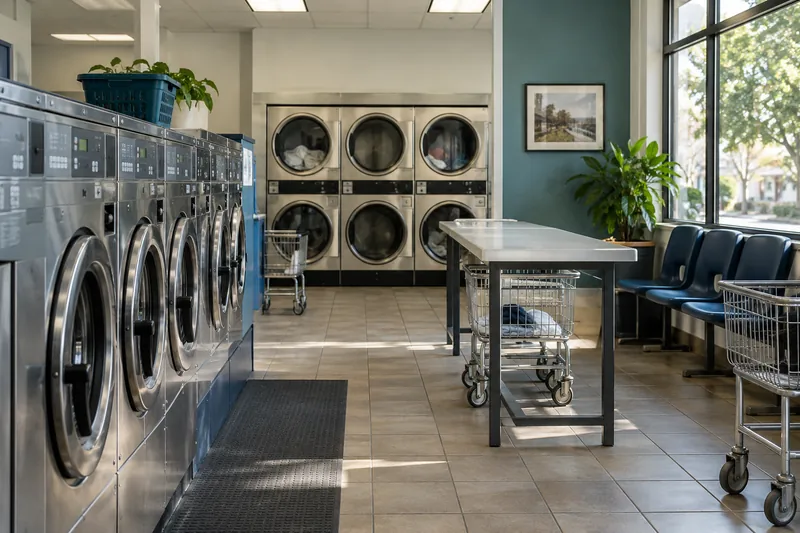
Search "laundromat for sale in Illinois" and you'll get a scattered mix of national business-for-sale marketplaces, a few broker listings, and the occasional Craigslist post. What you won't get is a clear picture of what these businesses actually sell for, which listings are priced fairly, and how the market differs between a Chicago rental corridor and a downstate college town. That's the gap this report fills.
Illinois is one of the best laundromat markets in the country for a straightforward reason: it combines dense, renter-heavy urban neighborhoods where laundromats are a daily necessity with a large base of established, cash-flowing stores whose owners are reaching retirement age. That combination — steady demand plus a wave of motivated sellers — is exactly what creates opportunity for buyers in 2026.
This guide walks through the current state of the Illinois market, what laundromats list for by region, how to read a listing without getting burned, how to finance the purchase, and finally a city-by-city index so you can go straight to the market you care about. It's written from the perspective of a licensed Illinois business broker who works these deals — not a national content mill.
The State of the 2026 Illinois Laundromat Market
Three forces define the Illinois laundromat market right now, and understanding them tells you more about your odds of finding a good deal than any single listing will.
A Retirement-Driven Wave of Sellers
A large share of Illinois laundromats were bought or built by owners who are now in their 60s and 70s. Many have operated the same store for 20 or 30 years, own their equipment outright, and are ready to exit. This "silver tsunami" of small-business retirements means there are more genuinely motivated sellers than there are in most industries — sellers who care as much about a clean, certain exit as they do about squeezing out the last dollar. For a prepared buyer, motivated sellers are where favorable terms come from.
Demand That Doesn't Blink in a Downturn
This guide and the city directory provide research context; they are not a feed of verified available listings. A national sold-business benchmark describes its reported sample, while a current advertised listing describes a seller’s asking terms. Neither is a complete survey of Illinois transactions.
A Widening Gap Between Modern and Dated Stores
The single most important trend for buyers in 2026 is the growing divide between modernized stores — card- or app-based payments, newer high-efficiency equipment, wash-dry-fold service — and old-fashioned coin-only stores running 15-year-old machines. Modern stores command premium prices but deliver premium, more transferable cash flow. Dated stores look cheaper on the sticker but often hide deferred capital expense and stagnant revenue. Neither is automatically the better buy; the skill is in pricing the difference correctly, which we'll cover below.
What Laundromats Actually List For in Illinois
Buyers almost always ask the price question first, so let's answer it directly — with the important caveat that asking prices and sale prices are two different things, and the number that matters is the one supported by verified financials.
The SDE Multiple: How Laundromats Are Really Priced
Use a multiple only after identifying the income measure, the included assets and the comparison period. National reported sold-business benchmarks are useful context, but they do not establish a city-specific price or real-estate cap rate. Compare the underlying earnings definitions before drawing a conclusion.
Compare asking terms with verified operating performance
Rather than quote a single misleading "average," it's more useful to think in tiers. The ranges below reflect the kinds of prices seen across Illinois listings and closed deals; every individual store must still be valued on its own verified numbers:
- Use an equipment-level inventory, service history and installed-cost quotes to evaluate the proposal. Track the effect on availability, repair response and customer use rather than assuming a standard revenue lift or repair saving. Retain evidence of the results a buyer will actually inherit.
Geography matters within every tier. A store in a high-rent Chicago corridor may carry a higher price because of its revenue, but it also carries a higher lease burden. A downstate store may be cheaper to buy and cheaper to operate but sits in a smaller demand pool. This is why the neighborhood demographics behind laundromat profitability deserve as much of your attention as the asking price.
Cap Rates and Return Expectations
Evaluate the full occupancy obligation using the signed lease, amendments and additional-rent history. Include known escalations and repair responsibilities, then test the store’s cash flow after planned labor and financing. No universal rent ratio makes an uncertain assignment or renewal right acceptable.
How to Read a Listing and Spot the Good Ones
A laundromat listing is a marketing document, not an audited financial statement. The buyers who do well are the ones who read every listing with a consistent, skeptical checklist.
The Five Numbers Every Listing Should Support
- Gross revenue — and how it's proven. Card/app-based stores can show transaction-level data; coin stores rely on collection logs. Revenue you can't independently verify should be discounted heavily. We wrote an entire guide on spotting inflated or fake laundromat revenue because this is where buyers lose the most money.
- Net profit / SDE. Confirm which expenses are and aren't included, and normalize owner add-backs. Our line-by-line P&L breakdown shows exactly how.
- Rent and lease term. Rent as a percentage of revenue is decisive — see our guide on the rent-to-revenue ratio. A great store on a lease with three years left and no renewal is a very different asset than the same store with a 10-year lease.
- Equipment age and condition. Machines nearing the end of their service life represent a looming capital expense that should reduce the price you pay. See our equipment upgrade guide.
- Utilities — especially water. The water bill is the hardest number to fake and one of the best cross-checks on claimed revenue. Our water bill test walks through the math.
Green Flags Worth Paying Up For
- Card/app payment data that lets you verify revenue to the day.
- A long lease (7+ years remaining or strong renewal options) with reasonable rent.
- Recently replaced or well-maintained equipment.
- Existing wash-dry-fold or pickup-and-delivery revenue with documented growth.
- A seller willing to provide financing or a transition period — a sign of confidence in the numbers.
Red Flags That Should Slow You Down
- Revenue claims backed only by "trust me" cash figures.
- A short lease, a landlord who also owns competing property, or vague renewal terms.
- Equipment at or past its service life with no capex adjustment in the price.
- Utility bills that don't square with the claimed number of turns per day.
- A seller in a hurry who won't allow proper due diligence. Our 2026 due diligence guide is your protection here.
SBA Loans — With Bigger Limits in 2026
For an SBA-backed acquisition, confirm the current program rules and the lender’s written conditions for this borrower and transaction. The individual loan maximum, combined borrowing policy, required equity and treatment of seller debt are distinct questions. A lender must approve the complete uses-of-funds and repayment structure.
Seller Financing
Because so many Illinois sellers are motivated retirees who own their equipment, seller financing is more available here than in many industries. A seller-held note can reduce your cash-to-close, keep the seller invested in a smooth transition, and often signals genuine confidence in the store's numbers. See seller financing structures that actually close.
Conventional and Equipment Financing
Some buyers use conventional business loans or finance the equipment separately, particularly when upgrading machines as part of the acquisition. Our guides on financing options for a laundromat purchase and equipment financing in Illinois cover the trade-offs.
Laundromats for Sale by Illinois City
Every market in Illinois has its own demand profile, competition level, and price range. Use the regional index below to jump straight to the city you're focused on — each page covers local demand drivers, competition, and what buying or selling a laundromat looks like in that market.
Chicago & Cook County
The densest, most renter-heavy market in the state — and the deepest pool of both buyers and sellers.
- Chicago, Cicero, Berwyn, Oak Park, Evanston, Skokie, Oak Lawn, Calumet City
- Des Plaines, Mount Prospect, Arlington Heights, Palatine, Schaumburg, Hoffman Estates, Elk Grove Village
- Niles, Park Ridge, Glenview, Northbrook, Streamwood
DuPage, Kane & the Fox Valley
Affluent, fast-growing suburbs with strong wash-dry-fold and premium-service potential.
- Naperville, Aurora, Elgin, Wheaton, Downers Grove, Lombard, Elmhurst, Addison
- Bloomingdale, Carol Stream, Bartlett, Lisle, Batavia, Geneva, St. Charles
Will County & the Southwest Suburbs
Lake & McHenry Counties (North)
- Waukegan, Buffalo Grove, Mundelein, Vernon Hills, Deerfield, Deer Park, Crystal Lake, Round Lake Beach
Central Illinois
College towns and mid-size cities with steady renter demand and lower operating costs.
- Springfield, Peoria, East Peoria, Bloomington, Normal, Champaign, Urbana, Decatur
- Danville, Kankakee, Pontiac, Lincoln, Taylorville, Jacksonville, Effingham, Mattoon, Streator
Northern & Western Illinois
- Rockford, Freeport, Dixon, Sterling, Moline, Rock Island, Galesburg
- Quincy, Macomb, Peru, LaSalle, Ottawa
Southern Illinois & Metro East
Not sure which market fits your budget and goals? Start with our ranking of the best Illinois cities to buy a laundromat in 2026, then browse the full cities directory.
Frequently Asked Questions
How much does a laundromat cost to buy in Illinois?
What is a good cap rate for an Illinois laundromat?
The defensible price is the one supported by verified earnings, transferable premises rights and the equipment obligations a buyer will inherit. Keep business value separate from real estate and explain capital needs without counting the same expense twice. A headline multiple is a starting question, not an appraisal.
How long does it take to buy a laundromat in Illinois?
Can I buy a laundromat with no money down?
Is buying an existing laundromat better than building one from scratch?
For most buyers, yes. An existing store comes with an established customer base, proven revenue, and existing utility infrastructure — the water and gas hookups alone can cost tens of thousands to build new. Buying lets you verify the numbers before you commit; building means betting on projections. New construction can make sense in an underserved growth market, but it's a fundamentally higher-risk path.
What's the difference between a coin-operated and a card-based laundromat listing?
Card- and app-based stores capture transaction-level revenue data, which makes their income far easier to verify — a meaningful advantage in due diligence and often a reason they command higher prices. Coin-only stores rely on collection logs and are harder to verify, so buyers should discount unverifiable revenue. See our comparison of coin vs. card-based laundromats in Illinois.
Conclusion
For a real opportunity, confirm that the seller is represented or has authorized the information, establish confidentiality and request the store-level package. Record whether real estate is included, what income figure is used and which liabilities or capital needs remain with the buyer. Those facts determine whether comparisons are meaningful.
Distinguish market context from available inventory
For a real opportunity, confirm that the seller is represented or has authorized the information, establish confidentiality and request the store-level package. Record whether real estate is included, what income figure is used and which liabilities or capital needs remain with the buyer. Those facts determine whether comparisons are meaningful.
Use historical sold benchmarks on a like-for-like basis
BizBuySell’s national laundromat category for sales reported during 2021–2025 publishes a median sold earnings multiple of 3.50×, with lower and upper quartiles of 2.72× and 4.50×. This is owner-discretionary earnings context from a national reported sample, not an Illinois-only pricing rule, a managed-store EBITDA multiple or a real-estate capitalization rate.
Do not combine that income definition with a different set of costs and call the result comparable. Keep a separate owner-operator SDE, a view after replacement labor and capital needs, and cash after the actual acquisition financing. Current listing asks and completed reported sales also describe different observations.
When real estate is included, value the building separately and normalize occupancy once in the business earnings. A related-party rent adjustment should reconcile both sides rather than create an extra benefit counted twice. The value workspace shows its assumptions and separates the business scenario from buyer cash flow.
Sources and review notes
Reviewed October 15, 2026. Primary references support the specific topics below. Practical checklists and explicitly labeled scenarios are our editorial analysis, not reported market outcomes.
- U.S. Census Bureau: 2020–2024 ACS summary-file data
B25003 tenure, B25024 units in structure and B25034 year built. City averages do not measure in-unit laundry or a store trade area. - U.S. Census Bureau: Illinois incorporated-place population estimates
Vintage 2024 estimates; population date July 1, 2024. These are distinct from ACS period estimates. - BizBuySell: reported sold laundromat valuation benchmarks, 2021–2025
National reported transactions; asking and sold figures are separate. These are historical category benchmarks, not Illinois-specific comparable sales.
Use this material to prepare questions and documents. A specific transaction needs its own legal, tax, lending and equipment review.
Thinking about selling your laundromat?
Start with a private conversation about your records, lease, equipment and timing. You do not need to have a price in mind.
Discuss your next step