Collect the lease and additional-rent statements, utility bills, payroll records, repair invoices, payment fees and insurance quotes. Map expense periods to the same periods as revenue. Separate an unpaid bill, a capital purchase and a recurring repair so the operating result does not depend on timing tricks.
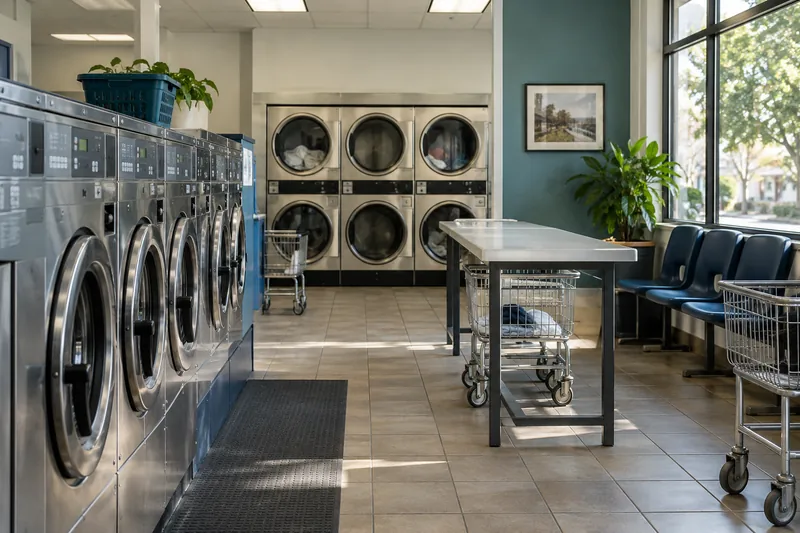
Understanding exactly how much it costs to run a laundromat in Illinois is essential whether you're evaluating an acquisition, building your first business plan, or trying to figure out why your current operation isn't as profitable as it should be. Laundromat operating costs in Illinois include both the obvious expenses — rent, utilities, and equipment maintenance — and a long list of hidden costs that can quietly erode margins until owners wonder where all the revenue went. This guide breaks down every major expense category, provides real-world cost benchmarks specific to the Illinois market, and shows you exactly how to cut costs and protect your profit margins.
Whether you're running a small neighborhood coin laundry in Peoria or a high-volume card-based facility in a Chicago suburb, these numbers will give you a reliable foundation for financial planning and investment analysis.
Laundromat Startup & Operating Costs in Illinois: What You Need to Budget For
Let's start with the big picture. A typical laundromat in Illinois has two distinct cost profiles: startup/acquisition costs and ongoing monthly operating costs. Both need to be clearly understood before you invest a dollar.
Build a complete acquisition budget
Make the decision from the actual operating records and transaction terms. Record the assumptions, identify the supporting documents and test the effect of a less favorable outcome. Keep an illustrative possibility separate from a documented result or a promise about what a buyer or seller will achieve.
- Use an equipment-level inventory, service history and installed-cost quotes to evaluate the proposal. Track the effect on availability, repair response and customer use rather than assuming a standard revenue lift or repair saving. Retain evidence of the results a buyer will actually inherit.
Monthly Operating Cost Overview
Here's a summary of what a typical 25-machine laundromat in an Illinois secondary market (e.g., Rockford, Champaign, Decatur) might expect to pay monthly in operating expenses:
| Decision | Evidence to request | How to use it |
|---|---|---|
| Operating performance | Same-period receipts, expenses and reconciliations | Separate reported results from projections and one-time activity. |
| Transfer obligations | Executed agreements, payoff statements and consent requirements | Identify the work and cash obligations that remain after closing. |
| Downside case | Written assumptions, quotes and a cash-flow schedule | Test liquidity and owner workload before relying on an upside case. |
How Much Does Electricity, Gas & Water Cost to Run a Laundromat in Illinois?
Build the forecast from documented receipts, contracts and operating costs, with a clearly labeled base case and downside case. Deduct replacement labor, sustainable capital needs and scheduled financing when assessing owner cash. An industry headline cannot substitute for the store’s own records or justify an unverified growth assumption.
Electricity Costs: What Drives the Bill
Measure consumption from the actual billing periods and installed equipment specifications. Verify billing units, wash formulas, non-vend use, fixed charges and the applicable tariff. A generic savings percentage or gallons-per-cycle assumption cannot establish this store’s expense, revenue or upgrade payback.
The primary electricity consumers in a laundromat are:
- Lighting (particularly in older facilities with fluorescent fixtures)
- HVAC systems
- Washer motors and controls
- Vending machines and change machines
Water and Sewer: The Biggest Variable Cost
Natural Gas: Water Heating and Drying Costs
Hidden Laundromat Expenses Illinois Owners Rarely Talk About (And How to Cut Them)
Beyond the obvious utility and rent costs, there's a category of expenses that consistently surprises new laundromat owners. These are the costs that rarely show up in a seller's pro forma — but they show up in your bank account every month.
Coin Machine and Card System Fees
Property Tax and CAM Charges
Have the transaction’s tax adviser distinguish the operating assets from qualifying real property and review the proposed allocation before closing. Rates, basis, gain character and reporting depend on the taxpayer and the assets. An exchange or seller note does not automatically defer every tax associated with selling a laundry business.
Security Systems and Camera Monitoring
Build staffing from the actual tasks, coverage requirements and market quotes for the work. Include owner responsibilities that will need to be replaced after closing. The distinction between SDE and managed-store cash flow matters more than a generic promise of low owner hours.
Coin Collection and Cash Management
Repairs and Emergency Maintenance
How to Lower Your Laundromat's Energy Bills in Illinois and Maximize Profit Margins
The good news is that most Illinois laundromats have meaningful opportunities to reduce their operating costs — often without major capital investment. Here's what the most profitable owners do consistently.
Five High-Impact Cost Reduction Strategies
- Add programmable HVAC controls: Set back temperature during off-hours (midnight to 6 AM) for meaningful savings during Illinois winters
- Upgrade to water-efficient front-load washers: Reduces both water and energy costs simultaneously
- Insulate hot water pipes and upgrade the water heater: Reduces heat loss and improves water heating efficiency
- Conduct a utility rate audit: Illinois commercial customers can often switch to more favorable rate structures or participate in demand response programs through ComEd or Ameren
For buyers considering an acquisition, understanding the potential for cost reduction is also a valuable valuation tool. A laundromat with high utility costs but clear improvement opportunities may be worth more after your operational improvements than the current owner's numbers suggest. Explore our analysis of laundromat equipment upgrades and their impact on business valuation for detailed ROI data.
Frequently Asked Questions: Laundromat Operating Costs in Illinois
How much profit does a laundromat make in Illinois?
What are the biggest costs of running a laundromat?
Is owning a laundromat profitable in Illinois?
Yes — when bought at the right price, in the right location, and managed efficiently. Illinois has consistently strong laundromat markets in high-density urban and suburban areas with large renter populations. The key to profitability is controlling utility costs, maintaining equipment proactively, and ensuring your acquisition price reflects a reasonable multiple of verified earnings.
How much electricity does a laundromat use per month?
How much water does a laundromat use per month?
Can laundromat operating costs be reduced significantly?
Evaluate Any Illinois Laundromat's True Profitability
Illinois Laundry Broker helps buyers and sellers accurately understand operating costs, true net income, and profit potential for any Illinois laundromat. Don't rely on a seller's numbers — let us verify them for you.
Get a Free Financial AnalysisKnow Your Numbers Before You Invest
Owning a laundromat in Illinois can be genuinely rewarding — both financially and as a business that serves your community. But profitability starts with a clear, accurate understanding of what it actually costs to operate. Utilities will be your largest expense category. Rent will be your second-largest. Equipment maintenance, insurance, and the hidden costs in between all add up to a total cost structure that must be understood before you evaluate any investment opportunity.
Use the benchmarks in this guide as your foundation. Cross-reference every utility line item when evaluating a purchase. Model the full cost structure — including your debt service if you're financing — and ensure you have sufficient margin left for both your return on investment and a maintenance reserve. When the numbers work, Illinois laundromats are excellent businesses. When they don't, no amount of hard work will make them profitable.
Ready to evaluate a specific Illinois laundromat and understand its true operating cost profile? Contact the team at Illinois Laundry Broker for expert guidance and a free consultation.
Related cost reduction strategies: Illinois operators are increasingly reducing energy costs through solar panel installations with state incentives that deliver strong ROI alongside lower utility bills. IoT-enabled predictive maintenance systems are dramatically reducing emergency repair costs for multi-location owners. And understanding Illinois environmental regulations for laundromats helps owners avoid compliance costs before they become penalties.
Word count: 2,743
Build costs from contracts and bills
For the buyer’s budget, include replacement labor and a sustainable equipment reserve even when those costs are absent from the seller’s reported SDE. Keep acquisition debt below the operating analysis. This makes it possible to compare store economics without mixing the financing choices of different owners.
Sources and review notes
Reviewed October 15, 2026. Primary references support the specific topics below. Practical checklists and explicitly labeled scenarios are our editorial analysis, not reported market outcomes.
- IRS: Publication 334, tax guide for small business
Business recordkeeping, income and expense treatment; owner distributions are not automatically an expense add-back. - CISA: cybersecurity for small and medium businesses
Business cybersecurity planning, software updates and access controls; relevant to remote monitoring and connected systems. - U.S. Department of Energy: water-intensive processes
Water-efficiency practices; application and savings depend on the installed equipment and operation.
Use this material to prepare questions and documents. A specific transaction needs its own legal, tax, lending and equipment review.
Thinking about selling your laundromat?
Start with a private conversation about your records, lease, equipment and timing. You do not need to have a price in mind.
Discuss your next step