Give the insurance adviser an accurate equipment schedule, premises arrangement, staffing model and service mix. Self-service vending, attended wash-dry-fold and pickup-and-delivery can create different exposures. Obtain written coverage descriptions and identify deductibles, exclusions and replacement-cost assumptions.
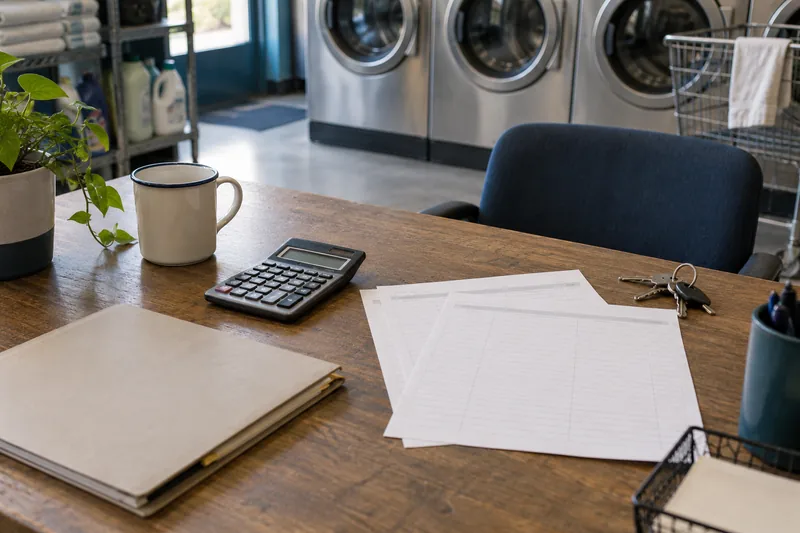
A laundromat is a public space full of water, electricity, heat, moving machinery, and unsupervised customers — which makes it exactly the kind of business where the right insurance quietly earns its cost. Most of the time nothing happens. But a single slip-and-fall claim, a flooded storefront, or an overnight equipment fire can dwarf years of premiums, and the owners who sleep well are the ones who got the coverage right before they needed it.
This guide covers the coverages a laundromat needs, realistic cost expectations, what SBA lenders and landlords require, and the factors that move your premium. It's written for buyers planning a purchase and owners reviewing their policy — a companion to our Illinois compliance checklist, where insurance is the final box to tick.
The Coverages Every Laundromat Actually Needs
Laundromat insurance isn't one policy — it's a stack of coverages, usually bundled into a business owner's policy (BOP) or commercial package, plus a few add-ons specific to the laundry business.
General Liability Insurance
The foundation. General liability covers third-party bodily injury and property damage — most commonly the slip-and-fall claim, which is the classic laundromat exposure given wet floors and constant foot traffic. It's the coverage landlords and lenders care most about, and no store should operate without it.
Commercial Property and Equipment Coverage
Your washers, dryers, water heaters, payment systems, and leasehold improvements represent a large investment — often the bulk of the purchase price. Property coverage protects that equipment and buildout against fire, water damage, vandalism, and similar perils. Make sure the coverage limit reflects the real replacement cost of the equipment, which ties directly to the equipment value you assessed during due diligence.
Equipment Breakdown Coverage
Distinct from property coverage, equipment breakdown (sometimes called boiler and machinery) covers mechanical or electrical failure of your equipment — a blown water heater, a failed motor, an electrical surge frying your payment system. For a business whose revenue depends entirely on machines running, this is valuable protection against the specific way laundromats lose money: downtime.
Business Interruption Coverage
If a covered event — a fire, a burst pipe, a major equipment failure — forces the store to close temporarily, business interruption coverage replaces lost income while you recover. Because a shuttered laundromat still owes rent and loan payments, this coverage protects your ability to keep paying fixed costs during a closure.
Bailee Coverage (for Wash-Dry-Fold)
If your store offers wash-dry-fold or pickup-and-delivery, you're taking temporary custody of customers' clothing — and you're responsible if it's lost, damaged, or destroyed while in your care. Bailee coverage handles exactly that. Any store running a wash-dry-fold operation should carry it; a store that adds the service later should update its policy.
Workers' Compensation (If You Have Employees)
If your laundromat has employees — attendants, wash-dry-fold staff, drivers — Illinois law requires workers' compensation insurance. This is a legal obligation, not an option, and applies even to a small staff. Factor it into your cost model whenever you plan to hire, as discussed in the staffing side of operating costs.
Obtain coverage and premium quotes for the actual risk
Buyers always want a number, so here's an honest answer: it depends heavily on the store, and anyone quoting a precise figure sight-unseen is guessing. The premium is driven by store size and revenue, the value and age of the equipment, your coverage limits and deductibles, the location and its claims history, and whether you offer higher-risk services like wash-dry-fold or delivery.
As a general orientation, many small-to-mid-size laundromats pay somewhere in the range of a few thousand dollars per year for a bundled business policy covering liability and property, with larger stores, higher limits, and added coverages (bailee, business interruption, workers' comp) costing more. Treat that only as a ballpark for budgeting. The only reliable number is an actual quote from a commercial insurance broker who can price your specific store and coverage needs. Get quotes as part of your purchase planning so the cost is baked into your ROI model, not a surprise after closing.
What SBA Lenders and Landlords Require
Lender Requirements
If you're financing the purchase — and most buyers are — insurance isn't optional; it's a closing condition. SBA and conventional lenders almost always require:
- General liability coverage at specified minimum limits.
- Property/equipment coverage protecting the collateral (your equipment), often with the lender named as loss payee or mortgagee so they're protected if the equipment is destroyed.
- Sometimes life insurance on the owner for the loan amount, particularly on SBA loans, so the debt is covered if something happens to you.
Have your insurance lined up early in the closing process so it doesn't hold up funding. Our 2026 SBA loan guide covers where this fits in the timeline.
Landlord Requirements
Your lease almost certainly requires you to carry general liability insurance and to name the landlord as an additional insured, along with minimum coverage limits. Review these requirements when you review the lease — they're part of understanding your total obligations, as covered in our lease agreement guide. Non-compliance can technically put you in default, so match your policy to what the lease demands.
Risk Factors That Move Your Premium — and How to Shop
What Raises (or Lowers) Your Premium
- Location and claims history. Higher-crime or higher-claim areas cost more; a clean claims history helps.
- Equipment age and condition. Older equipment and older buildings can raise property and breakdown premiums — another reason equipment condition matters to the total cost of ownership.
- Attended vs. unattended. Having an attendant present can reduce certain risks (and sometimes premiums), while a fully unattended store may face different pricing.
- Added services. Wash-dry-fold, delivery, and vending expand your exposure and can raise premiums (and require added coverages like bailee and commercial auto).
- Safety features. Security cameras, good lighting, non-slip flooring, alarm and sprinkler systems, and proper maintenance can all help.
How to Shop It
Work with a commercial insurance broker who understands laundromats or coin-operated businesses specifically — they'll know which coverages you actually need and which carriers price the category well. Get multiple quotes, compare coverage (not just price), confirm the limits satisfy your lender and landlord, and revisit the policy whenever your store changes materially — new equipment, added services, or a jump in revenue. Insurance is one of the few operating costs where a knowledgeable broker can genuinely save you money without cutting protection.
Planning a Laundromat Purchase in Illinois?
Insurance is one piece of a bigger closing puzzle — alongside financing, licensing, and lease review. I help Illinois buyers coordinate the full path to ownership, including making sure coverage is lined up so it doesn't stall your closing, and connecting you with brokers who know the laundromat category.
Frequently Asked Questions
What insurance does a laundromat need in Illinois?
At minimum, general liability and commercial property/equipment coverage. Most owners add business interruption and equipment breakdown coverage, plus bailee coverage if they offer wash-dry-fold. Workers' compensation is legally required in Illinois if you have employees.
How much does laundromat insurance cost in Illinois?
It varies widely with store size, revenue, equipment value, limits, and location. Many small-to-mid-size stores fall in the range of a few thousand dollars per year for a bundled policy, with larger stores costing more. Only a broker's quote for your specific store is reliable.
Do lenders require insurance to finance a laundromat?
Yes. SBA and conventional lenders require proof of adequate liability and property/equipment coverage — often naming the lender's interest — as a condition of funding, and SBA loans sometimes require life insurance on the owner. Landlords separately require liability coverage naming them as additional insured.
What is bailee coverage and do I need it?
Bailee coverage protects customers' property while it's in your custody — essential for any store offering wash-dry-fold or pickup-and-delivery, since you're liable if clothing is lost or damaged in your care. A pure self-service store without these services generally doesn't need it, but should add it if it introduces them.
Can insurance costs affect whether a laundromat is a good buy?
They're rarely a deal-breaker on their own, but they're a real operating cost that should be in your model. An older store in a high-claim area with added services will cost more to insure than a modern, unattended self-service store — factor the actual quoted premium into your return calculation.
Quote the actual operation before finalizing the budget
Check lender and landlord requirements against the proposed policy, including the required insured parties and effective dates. Premium ranges from another store do not establish what this operation will cost to insure. Keep service-laundry custody and delivery questions explicit rather than assuming a general liability policy answers them.
Sources and review notes
Reviewed October 15, 2026. Primary references support the specific topics below. Practical checklists and explicitly labeled scenarios are our editorial analysis, not reported market outcomes.
- SBA: business insurance
Coverage categories and shopping considerations; premiums and requirements must be quoted for the actual risk. - U.S. Department of Justice: small business accessibility guidance
Public accommodation obligations and accessibility planning; evaluate the actual facility with qualified advisers.
Use this material to prepare questions and documents. A specific transaction needs its own legal, tax, lending and equipment review.
Thinking about selling your laundromat?
Start with a private conversation about your records, lease, equipment and timing. You do not need to have a price in mind.
Discuss your next step