Request the actual quote, installation scope, delivery schedule and financing agreement. Confirm whether the obligation is a loan, finance lease, operating lease or service arrangement. Ownership, early payoff, maintenance responsibility and liens can differ even when monthly payments look similar.
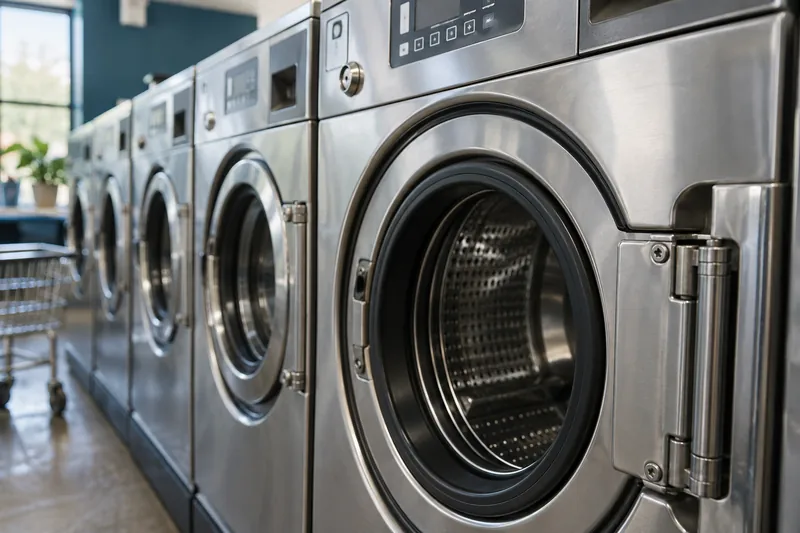
Equipment is the core asset of any laundromat — the machines that generate every dollar of revenue, depreciate over time, and determine the business's competitive position in its market. Understanding laundromat equipment financing is essential whether you're buying an existing business (evaluating the equipment you're inheriting), planning post-acquisition upgrades, or building a new store from scratch. Illinois laundromat buyers in 2026 have more financing options than at any previous point, but navigating those options intelligently requires understanding how equipment age affects terms, which sources offer the best structure, and how equipment financing interacts with business acquisition loans.
This guide covers the full spectrum of commercial washer and dryer financing options for Illinois buyers — manufacturer programs, equipment lenders, SBA financing, and the strategic question of new versus refurbished equipment. By the end, you'll have a clear framework for making the equipment financing decisions that make the most financial sense for your specific acquisition or upgrade scenario.
Why Equipment Age and Brand Affect Your Loan Terms
Commercial laundry equipment financing isn't like consumer auto loans — lenders assess the specific equipment being financed and adjust terms accordingly. Understanding what drives those term differences helps you negotiate better financing and make smarter equipment decisions.
Equipment Age and Residual Value
Lenders price loans based on the expected residual value of collateral at loan maturity. For commercial laundry equipment, lenders know that a 2-year-old Speed Queen or Maytag commercial washer has significant resale value; a 12-year-old machine in the same frame has minimal collateral value. This reality translates to loan terms directly:
- For an SBA-backed acquisition, confirm the current program rules and the lender’s written conditions for this borrower and transaction. The individual loan maximum, combined borrowing policy, required equity and treatment of seller debt are distinct questions. A lender must approve the complete uses-of-funds and repayment structure.
- Use an equipment-level inventory, service history and installed-cost quotes to evaluate the proposal. Track the effect on availability, repair response and customer use rather than assuming a standard revenue lift or repair saving. Retain evidence of the results a buyer will actually inherit.
- 10+ year old equipment: Some lenders won't finance as collateral; may only be covered in unsecured business financing
For SBA 7(a) acquisition loans that include the business's existing equipment as part of the collateral base, equipment age directly affects the lender's collateral assessment and therefore the loan approval process.
Brand Reputation and Parts Availability
Not all commercial laundry equipment is treated equally by lenders and appraisers. Speed Queen (Alliance Laundry Systems), Maytag Commercial, and Dexter are the dominant brands in Illinois laundromat equipment and carry the strongest residual values and lender acceptance. Lesser-known or discontinued brands may be harder to finance as specific collateral.
Parts availability matters for lenders' collateral risk assessment — equipment for which parts are no longer manufactured or are difficult to source has higher risk of becoming non-functional, reducing collateral value. Sticking with major-brand equipment isn't just an operational preference; it's a financing consideration that affects your long-term ability to refinance or secure additional equipment loans. Our equipment upgrade guide covers brand considerations in depth.
Card-Based vs. Coin Equipment Financing Differences
Modern card-based payment systems (Speed Queen Connect, Laundroview, and similar) add value to financing assessments because they provide verifiable revenue data — lenders can review digital transaction records rather than relying solely on tax returns and water bill analysis. For equipment upgrades to card-based systems, some lenders offer more favorable terms recognizing the improved revenue verification capability.
The Best Financing Sources for Commercial Laundry Equipment
Illinois laundromat buyers have multiple financing pathways for equipment — each with different advantages depending on your situation.
Manufacturer and Distributor Financing Programs
Alliance Laundry Systems (Speed Queen's parent company) operates Alliance Laundry Finance, which provides equipment financing specifically structured for commercial laundry equipment acquisitions. These manufacturer-affiliated programs often offer promotional rates for new equipment purchases, are familiar with the collateral, and have streamlined approval processes for qualified buyers. Speed Queen financing in Illinois is commonly used for both single-store upgrades and multi-store equipment refreshes.
Distributors — the regional dealers who sell and service Speed Queen, Maytag, and Dexter equipment in Illinois — often have established lender relationships and can facilitate financing introductions as part of equipment purchase agreements. Building a relationship with your regional distributor is valuable both for equipment pricing (volume discounts are available) and financing access.
Equipment Leasing Companies
Evaluate the full occupancy obligation using the signed lease, amendments and additional-rent history. Include known escalations and repair responsibilities, then test the store’s cash flow after planned labor and financing. No universal rent ratio makes an uncertain assignment or renewal right acceptable.
SBA 7(a) Equipment Financing
The SBA 7(a) program provides financing for equipment as part of business acquisitions or as standalone equipment financing for existing small businesses. SBA equipment loans offer lower rates and longer terms than conventional equipment financing. For Illinois laundromat buyers using SBA financing for a business acquisition, equipment can be included in the same SBA loan — avoiding the need for a separate equipment financing transaction at closing. Our detailed guide on SBA loans for laundromat purchases covers this integration in full detail.
Conventional Business Lines of Credit
For established laundromat owners upgrading equipment in an existing business, a business line of credit or conventional business term loan can finance equipment purchases without the SBA's paperwork requirements. Illinois community banks and credit unions are often the best sources for these products — they have more flexibility in underwriting than large national banks and are generally more familiar with laundromat business models than banks unfamiliar with the industry.
New vs. Refurbished: Which Makes More Financial Sense
The new vs. refurbished equipment decision is one of the most important — and most debated — financial decisions in laundromat investment. There's no universal right answer, but here's the framework for making the right call in your specific situation.
The Case for New Equipment
Measure consumption from the actual billing periods and installed equipment specifications. Verify billing units, wash formulas, non-vend use, fixed charges and the applicable tariff. A generic savings percentage or gallons-per-cycle assumption cannot establish this store’s expense, revenue or upgrade payback.
The Case for Refurbished Equipment
The critical word is "certified." Refurbished equipment from reputable commercial laundry rebuilders includes component replacement, full testing, and limited warranties. Equipment described as "used" or "working condition" without rebuilding history is a different and higher-risk proposition — particularly for internal components (bearings, seals, electrical) that aren't visible externally but fail unexpectedly.
The Financial Comparison Framework
How to Bundle Equipment Financing Into Your Business Acquisition Loan
For buyers acquiring an existing laundromat that needs equipment upgrades, bundling the equipment financing into the business acquisition loan is often more efficient than managing separate financing transactions.
The SBA 7(a) Bundle Approach
The key requirement is that both the business acquisition and equipment upgrade be incorporated into a single loan request at the time of application. Adding equipment financing after closing as a separate transaction loses the bundling benefit and requires a second underwriting process. Plan this during the acquisition stage.
Equipment Seller Credits
Frequently Asked Questions: Laundromat Equipment Financing
How much does it cost to equip a laundromat from scratch?
Can I get financing for used laundromat equipment?
What credit score do I need for laundromat equipment financing?
How long can I finance commercial laundry equipment?
Is it better to lease or buy commercial laundry equipment?
Can I include equipment upgrades in my SBA acquisition loan?
Yes — SBA 7(a) loans can bundle business acquisition, equipment upgrades, leasehold improvements, and working capital in a single transaction. This bundled approach is often the most efficient structure for buyers acquiring businesses with known equipment investment needs. Work with an SBA-experienced lender who has laundromat transaction experience, as discussed in our laundromat financing guide.
Connect With Laundromat Equipment Financing Specialists
Illinois Laundry Broker works with Illinois laundromat buyers to connect them with the right financing sources — SBA lenders, equipment programs, and conventional lenders experienced with laundromat transactions.
Schedule a Free ConsultationEquipment Financing Is a Strategic Decision, Not Just a Transaction
Laundromat equipment financing decisions made at acquisition time have multi-year financial consequences. The equipment you start with determines your competitive market position, your utility costs, your maintenance burden, and your financing options for years to come. Approaching the equipment financing decision strategically — evaluating new vs. refurbished through a total cost of ownership lens, understanding how equipment age affects loan terms, and considering bundled SBA financing for maximum efficiency — produces meaningfully better outcomes than treating equipment as an afterthought.
The best time to think about equipment is before you sign the purchase agreement — not after. A thorough equipment condition assessment during due diligence, combined with a clear plan for any needed upgrades and the financing to execute it, ensures you enter ownership with eyes open about your equipment position and a clear path forward.
For personalized guidance on laundromat equipment financing options for your specific Illinois acquisition, contact Illinois Laundry Broker. We can connect you with lenders who understand laundromat transactions and help you structure an equipment financing approach that makes sense for your deal.
Word count: 2,738
Read the equipment obligation as part of the whole deal
Model the equipment payment alongside acquisition debt and replacement reserves. Check whether the landlord consents to installation and whether infrastructure work is excluded from the quote. A financing approval does not establish that the equipment will fit the premises or produce the projected return.
Sources and review notes
Reviewed October 15, 2026. Primary references support the specific topics below. Practical checklists and explicitly labeled scenarios are our editorial analysis, not reported market outcomes.
- SBA: 7(a) loan program
Program purposes, eligibility and the individual 7(a) loan maximum. - SBA: 504 loan program
Fixed-asset financing; eligible purposes and maximum amounts depend on program conditions. - SBA: loan origination policies and procedures
Lender guidance governs equity, seller-note treatment, eligibility and change-of-ownership requirements. - SBA: July 2026 combined borrowing policy
Combined borrowing capacity is different from an individual loan limit; effective July 4, 2026.
Use this material to prepare questions and documents. A specific transaction needs its own legal, tax, lending and equipment review.
Thinking about selling your laundromat?
Start with a private conversation about your records, lease, equipment and timing. You do not need to have a price in mind.
Discuss your next step