A sale timeline should identify the steps that can begin in parallel and those that require a prior decision. Financial preparation can happen while the lease is reviewed. Landlord consent, lender underwriting and a buyer’s source-of-funds review can each become independent critical paths.
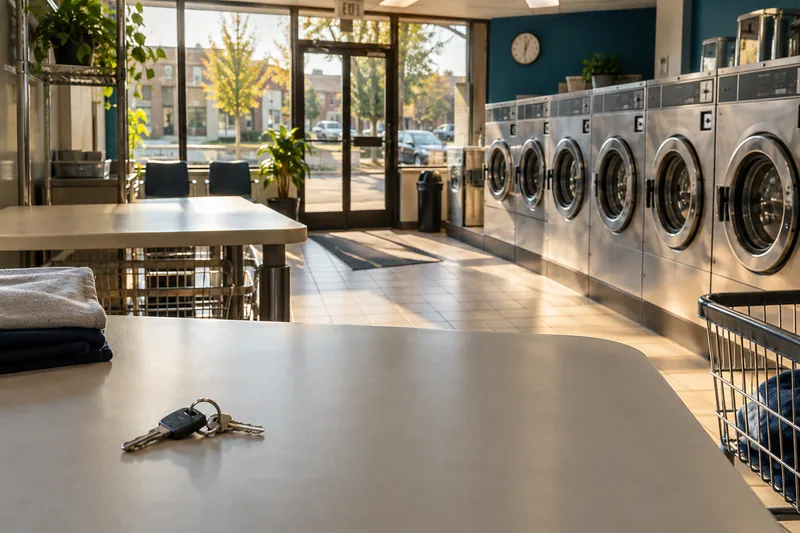
One of the first questions every laundromat owner asks when they start considering a sale is: how long will this take? The honest answer is: it depends — but not on luck. The timeline to sell a laundromat in Illinois is heavily influenced by factors within your control: the quality of your financial documentation, your pricing accuracy, the condition of your equipment, and the professional support you bring to the transaction. Understanding the typical timeline — and the variables that compress or extend it — lets you plan realistically and take the steps that lead to a faster, higher-value outcome.
This guide walks through the complete Illinois laundromat sale timeline, the most impactful factors that affect your closing speed, and how the choice between working with a professional broker versus selling independently changes everything about the process.
Build a transaction timeline around dependencies
The Illinois laundromat market, while active, follows a process that simply takes time — there are no meaningful shortcuts without trading off price or security. Here's the typical timeline with professional broker representation.
Phase 1: Preparation (4–8 Weeks)
The preparation phase happens before your business even hits the market. This is when you gather and organize financial documents, complete a professional valuation, address any obvious facility or equipment issues, and prepare the marketing materials that will represent your business to prospective buyers. Sellers who skip or rush this phase consistently encounter problems later — either during due diligence when incomplete records delay financing, or in negotiations when undisclosed issues emerge and buyers demand price concessions.
Preparation activities include:
- Gathering 3 years of tax returns, bank statements, and utility bills
- Preparing a current P&L statement
- Confirming lease status and assignability
- Completing any deferred maintenance
- Establishing a non-disclosure process for prospective buyer inquiries
Make the decision from the actual operating records and transaction terms. Record the assumptions, identify the supporting documents and test the effect of a less favorable outcome. Keep an illustrative possibility separate from a documented result or a promise about what a buyer or seller will achieve.
Phase 2: Marketing and Buyer Qualification (4–12 Weeks)
Phase 3: Due Diligence and Financing (30–60 Days)
For an SBA-backed acquisition, confirm the current program rules and the lender’s written conditions for this borrower and transaction. The individual loan maximum, combined borrowing policy, required equity and treatment of seller debt are distinct questions. A lender must approve the complete uses-of-funds and repayment structure.
Phase 4: Closing Logistics (2–3 Weeks)
Measure consumption from the actual billing periods and installed equipment specifications. Verify billing units, wash formulas, non-vend use, fixed charges and the applicable tariff. A generic savings percentage or gallons-per-cycle assumption cannot establish this store’s expense, revenue or upgrade payback.
Total Timeline Summary
| Decision | Evidence to request | How to use it |
|---|---|---|
| Operating performance | Same-period receipts, expenses and reconciliations | Separate reported results from projections and one-time activity. |
| Transfer obligations | Executed agreements, payoff statements and consent requirements | Identify the work and cash obligations that remain after closing. |
| Downside case | Written assumptions, quotes and a cash-flow schedule | Test liquidity and owner workload before relying on an upside case. |
Key Factors That Speed Up or Slow Down Your Laundromat Sale in Illinois
Understanding what moves the needle on timeline gives you actionable leverage. These are the factors that most consistently separate fast closings from protracted ones.
Factors That Speed Up Your Sale
- Accurate, market-aligned pricing: The single biggest accelerator. Correctly priced listings generate multiple offers quickly; overpriced listings sit
- Complete, organized financial documentation: Buyers and lenders move fast when all records are clean and readily available
- Strong lease with long remaining term: Gives buyers and their SBA lenders confidence; reduces lease-related complications
- Well-maintained equipment: Reduces due diligence concerns and equipment-related negotiations
- Card-based payment system: Remote revenue data gives buyers faster verification confidence
- Professional broker representation: Active deal management keeps all parties moving and problems from festering
Factors That Slow Down Your Sale
- Incomplete or disorganized records: Creates buyer uncertainty and financing delays
- Short remaining lease term: Buyers hesitate; lenders may decline to finance without new lease secured
- Aging equipment needing replacement: Creates valuation disputes during due diligence that can stall or kill deals
- Uncooperative landlord: Lease assignment complications are one of the most common deal-delay or deal-killer factors
- Financing challenges: Buyers who haven't pre-qualified or who've applied to only one lender experience delays
How to Prepare Your Illinois Laundromat for a Faster, More Profitable Sale
Financial Record Organization (Most Important)
Gather, organize, and reconcile 3 years of tax returns, bank statements, and utility bills. Prepare a clean, current P&L statement. Resolve any discrepancies between your records before buyers discover them. Buyers and lenders move fastest when they receive a complete, well-organized financial package on their first request. Review our guide on how to increase laundromat revenue before selling for comprehensive pre-sale preparation strategies.
Lease Status Confirmation
Review your current lease for remaining term, renewal options, assignment provisions, and any landlord notifications required for a sale. If your lease has less than 5 years remaining, proactively approach your landlord about an extension before listing. A confirmed, assignable long-term lease is one of the strongest accelerators of buyer confidence in an Illinois laundromat transaction.
Facility Presentation
Clean, well-lit, and well-maintained facilities generate more positive buyer responses and fewer negotiating friction points. Before listing: repair all non-functioning machines, refresh lighting, address any visible maintenance issues, and ensure the exterior is clean and inviting. Buyers form strong first impressions and those impressions influence offers.
Working With Illinois Laundromat Brokers vs. Selling on Your Own: Which Gets You Sold Faster?
The FSBO vs. broker-assisted comparison is worth examining honestly for Illinois laundromat sellers.
FSBO Laundromat Sales in Illinois: The Reality
For Sale By Owner transactions in the laundromat sector face several structural challenges. Without professional listing exposure, your buyer pool is limited primarily to people who happen to be actively searching. Without pre-qualification processes, you waste weeks engaging buyers who can't finance the purchase. Without transaction management, due diligence delays accumulate because there's no professional keeping the process moving. And without market pricing expertise, FSBO sellers often price incorrectly — either leaving money on the table or sitting unsold for months.
Broker-Assisted Sales: The Advantage
Frequently Asked Questions: Selling a Laundromat in Illinois
What is the fastest a laundromat has sold in Illinois?
Evaluate the full occupancy obligation using the signed lease, amendments and additional-rent history. Include known escalations and repair responsibilities, then test the store’s cash flow after planned labor and financing. No universal rent ratio makes an uncertain assignment or renewal right acceptable.
Why is my laundromat not selling?
The most common reasons Illinois laundromats sit unsold are: overpricing relative to verified earnings and comparables, incomplete or questionable financial documentation that makes buyers nervous, a short remaining lease term, aging equipment with significant replacement costs, or lack of professional marketing reaching qualified buyers. Address these issues systematically and your sale will move.
Does the time of year affect how quickly a laundromat sells?
Laundromat sales in Illinois don't have as pronounced seasonal patterns as residential real estate, but spring (March–June) tends to see higher buyer activity. Year-end listing activity often slows in December–January. The business's financial strength matters far more than the listing month.
How do I maintain confidentiality when selling my laundromat?
Confidentiality is maintained through a professional broker's non-disclosure agreement (NDA) process — prospective buyers sign before receiving any identifying business information. Listings are marketed without the business name or specific address until buyers are pre-qualified and have signed an NDA. Never advertise your sale publicly yourself without this protection in place.
What should I do if my laundromat sale is taking too long?
Plan the Timeline, Control the Outcome
The timeline to sell a laundromat in Illinois isn't fixed — it's shaped by the decisions you make in the months before and after listing. Sellers who invest in preparation, price accurately, document thoroughly, and work with experienced professionals consistently achieve faster sales at better prices.
The team at Illinois Laundry Broker is ready to assess your specific situation and give you an honest timeline estimate based on your business's current state and the Illinois market conditions. Reach out for a confidential, no-obligation conversation today.
Word count: 2,710
Build a timeline around dependencies
Use milestone dates and an issue owner rather than a promised closing duration. Track missing records, inspection findings and consent documents. A well-prepared file reduces avoidable pauses, but it does not control a lender’s decision or guarantee that the first interested buyer will close.
Sources and review notes
Reviewed October 15, 2026. Primary references support the specific topics below. Practical checklists and explicitly labeled scenarios are our editorial analysis, not reported market outcomes.
- IRS: Form 8594, asset acquisition statement
Buyer/seller reporting for applicable asset acquisitions and purchase-price allocation. - SBA: 7(a) loan program
Program purposes, eligibility and the individual 7(a) loan maximum. - BizBuySell: reported sold laundromat valuation benchmarks, 2021–2025
National reported transactions; asking and sold figures are separate. These are historical category benchmarks, not Illinois-specific comparable sales.
Use this material to prepare questions and documents. A specific transaction needs its own legal, tax, lending and equipment review.
Thinking about selling your laundromat?
Start with a private conversation about your records, lease, equipment and timing. You do not need to have a price in mind.
Discuss your next step