Use direct observations and voluntary feedback to find friction: unclear machine instructions, inaccessible payment options, unreliable posted hours, poor lighting or slow complaint resolution. Those issues can affect customers of many ages, and fixing them does not require a claim about the behavior of an entire generation.
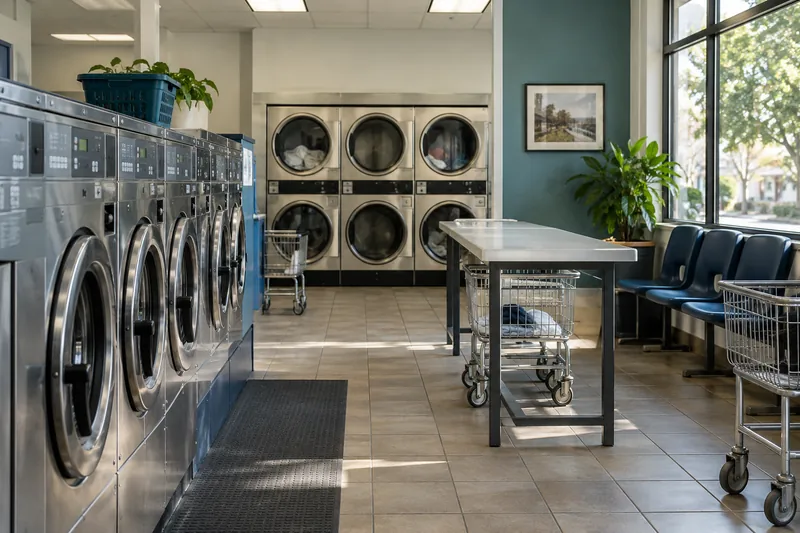
Picture two laundromats, both within walking distance of the same apartment building in Wicker Park. One has been operating since 1998 — coin-only machines, flickering fluorescent lighting, a bulletin board with flyers for local services, and a hand-lettered sign reminding customers not to leave laundry unattended. The other opened 18 months ago — app-based payment, plant-filled windowsills, warm Edison lighting, a mural on the east wall, and a TikTok account with 12,000 followers.
Evaluate the full occupancy obligation using the signed lease, amendments and additional-rent history. Include known escalations and repair responsibilities, then test the store’s cash flow after planned labor and financing. No universal rent ratio makes an uncertain assignment or renewal right acceptable.
This guide covers everything a laundromat owner needs to know about Gen Z renter behavior — and exactly how to redesign your customer experience to win their loyalty.
Understanding the Gen Z Consumer Profile
Before you can attract Gen Z customers, you need to understand how differently they experience the world compared to the Boomers and Gen Xers who defined the laundromat's traditional customer base.
They've Never Not Had the Internet
Gen Z grew up with smartphones from middle school onward. They don't experience physical and digital as separate realities — for them, everything has a digital layer. A business that doesn't have a Google Business Profile with recent photos and reviews might as well not exist. A business that requires cash or coins for payment feels as anachronistic to a 23-year-old as a fax machine.
This isn't snobbery — it's the operating system they were given. Designing your laundromat experience around cash and coins means you're asking Gen Z customers to context-switch into a transaction mode they don't use for anything else in their lives. Friction like that doesn't just inconvenience them; it signals that your business doesn't understand or care about them.
They Research Before They Visit
Gen Z consumers do more pre-purchase research than any prior generation. Before visiting a laundromat for the first time, they'll check Google Maps reviews, look at photos, scroll your Instagram if you have one, and possibly check Reddit or TikTok for local recommendations. A laundromat with 4.2 stars and recent, polished photos will outperform one with 3.6 stars and no photos before a single Gen Z customer walks through the door.
The practical implication: actively managing your Google Business Profile, responding to reviews, and posting current interior photos is now core marketing, not optional. A 30-minute investment per month in these platforms can meaningfully shift your new customer acquisition among younger renters.
They Value Experiences Over Transactions
This is the most important behavioral insight for laundromat owners: Gen Z doesn't separate the service (clean laundry) from the experience of getting it. The 45 minutes they spend in your store waiting for their wash cycle is time they're spending in your physical environment — and that environment communicates everything about your brand.
Measure consumption from the actual billing periods and installed equipment specifications. Verify billing units, wash formulas, non-vend use, fixed charges and the applicable tariff. A generic savings percentage or gallons-per-cycle assumption cannot establish this store’s expense, revenue or upgrade payback.
They Care About Values, Not Just Value
Multiple consumer research studies confirm that Gen Z is more likely than prior generations to factor a company's environmental and social positions into purchasing decisions. This doesn't mean they want a lecture with their laundry. It means visible, genuine operational choices — energy-efficient machines, reduced-water washing programs, eco-friendly detergent dispensers — create positive brand associations that compound over time. Performative sustainability is quickly detected and creates backlash; authentic operational choices create loyalty.
App-Based Payments and the Death of Coin
Nothing signals "we understand you" to a Gen Z customer faster than mobile payment. And nothing signals the opposite faster than a coin-only system. This isn't hyperbole — laundromat operators across Illinois who've made the switch report measurable shifts in younger customer traffic within months of conversion.
The Payment Conversion Business Case
Use an equipment-level inventory, service history and installed-cost quotes to evaluate the proposal. Track the effect on availability, repair response and customer use rather than assuming a standard revenue lift or repair saving. Retain evidence of the results a buyer will actually inherit.
The defensible price is the one supported by verified earnings, transferable premises rights and the equipment obligations a buyer will inherit. Keep business value separate from real estate and explain capital needs without counting the same expense twice. A headline multiple is a starting question, not an appraisal.
Beyond Payment: The App Ecosystem
The most sophisticated laundromat app systems do more than process payments. They notify customers when their cycle is done (eliminating the anxiety of over-drying or unattended loads), allow customers to see machine availability before leaving their apartment, offer loyalty points that accumulate across visits, and send promotional push notifications. Each of these features addresses a specific Gen Z behavioral preference: real-time information, convenience, transparency, and reward for loyalty.
Platforms like Cents, Starchup, and CSC PayRange offer app-based customer engagement tools beyond the basic payment layer. Building a loyalty program — even a simple one that rewards every 10th wash with a free dry cycle — generates the kind of habitual return behavior that sustains a laundromat's revenue through seasonal fluctuations.
Google Pay, Apple Pay, and Tap-to-Pay
For customers who don't want to download a brand-specific app, NFC-capable machines and kiosks that accept Google Pay and Apple Pay create the zero-friction payment experience Gen Z expects. Many younger renters literally don't carry their physical wallet anymore. A laundromat that accepts their phone's digital wallet requires no mental overhead, no change-making detour, no app download commitment. This is the minimum viable payment modernization — everything else builds on this foundation.
Eco-Conscious and Aesthetic Business Appeal
These two elements — environmental authenticity and intentional design — might seem unrelated, but for Gen Z they're deeply connected. Both are about what your business communicates without words, and both have direct effects on customer acquisition and retention.
Genuine Sustainability That's Visible
Other sustainability signals that resonate with Gen Z: LED lighting (visible energy efficiency), refillable detergent dispensers instead of single-use pods, recycling bins prominently labeled, and — for the ambitious operators — solar panels on the roof with a display showing current power generation (see our full guide on solar-powered laundromats in Illinois for the business case). Each of these creates a visual narrative that says "this business thinks about its impact."
Design as Marketing
The "aesthetic laundromat" isn't just a social media trend — it's a category of business that has figured out that design is marketing. Every dollar spent on intentional visual design in a laundromat pays back through organic social media sharing, positive review content, and word-of-mouth referrals in a way that traditional advertising never achieves.
Build the forecast from documented receipts, contracts and operating costs, with a clearly labeled base case and downside case. Deduct replacement labor, sustainable capital needs and scheduled financing when assessing owner cash. An industry headline cannot substitute for the store’s own records or justify an unverified growth assumption.
Cleanliness as a Non-Negotiable
Creating a Brand That Resonates on TikTok and Instagram
Most laundromat owners haven't considered social media as a tool for their business. This is exactly why the laundromat owners who do use it effectively stand out so dramatically. The bar for laundromat social media is low, which means consistent, genuine content creates outsized visibility relative to the effort invested.
Why Laundromats Actually Work Well on Social Media
Laundromats have natural visual assets: colorful machines in rows, the satisfying motion of spinning drums, the steam and ambient warmth, the social dynamics of a shared community space. These elements photograph and video well. TikTok's algorithm favors locally-relevant content, which means a Chicago-area laundromat with consistent posting can organically reach renters within a 5-mile radius — precisely the customer base it needs. This is hyper-targeted local advertising at zero media cost.
Content That Performs in the Laundromat Category
The content types that consistently generate engagement for laundromat social accounts include:
- ASMR-style machine videos: Close-up video of wash cycles, spinning drums, and steam release are surprisingly high-performing on TikTok. No narration needed — these perform on sensory appeal alone.
- Before/after transformation content: Before-and-after of dirty-to-clean laundry, or renovation before/after of a store redesign, consistently earns saves and shares.
- Local community angles: "Things to do in [Neighborhood] while your laundry runs" content positions your store as a neighborhood institution, not just a utility.
- Behind-the-scenes operations: Showing machine maintenance, cleaning protocols, or a day in the life creates transparency and trust — both highly valued by Gen Z.
Google Business Profile: The Most Underrated Platform
Before any business owner invests in TikTok content, they should fully optimize their Google Business Profile. For local businesses, Google Business is where purchase decisions happen — it's the first thing that appears when someone searches "laundromat near me" in Evanston or Pilsen or Naperville. A complete profile with 20+ current photos, weekly posts, responses to every review (positive and negative), and accurate hours and amenities information can double the click-through rate from local search results.
Responding to negative reviews is particularly important for Gen Z credibility. A response that's thoughtful, non-defensive, and demonstrates you've addressed the issue tells prospective customers more about your business's character than ten five-star reviews. Gen Z has high sensitivity to authentic response vs. corporate deflection — the tone matters as much as the substance.
The Neighborhood Partnership Play
Gen Z responds strongly to businesses that are embedded in their local community rather than operating as purely transactional entities. Laundromat owners who build partnerships with adjacent businesses — the coffee shop next door, the yoga studio down the block, the vintage clothing store across the street — create cross-promotional opportunities that expand their reach organically.
The Data Case for Marketing Investment
This math becomes even more compelling when you factor in how Gen Z customers affect monthly laundromat revenue through higher per-visit spending (especially on premium services like wash-dry-fold), loyalty program participation, and word-of-mouth referrals within dense urban and suburban renter networks.
The Business Valuation Angle
The improvements described in this article — payment modernization, design upgrades, social presence — are all visible and documentable during a buyer's due diligence process. They signal that the business has a healthy future revenue trajectory, which is exactly what commands premium valuation multiples. If you're building toward a sale, read our guide on increasing laundromat revenue before selling for the full strategy.
FAQ: Marketing Laundromats to Gen Z in Illinois
What's the single most important upgrade for attracting Gen Z customers?
App-based or card payment — specifically NFC tap-to-pay or a dedicated app with Google Pay/Apple Pay support. This removes the single biggest friction point for younger renters and signals immediately that your business understands modern consumer expectations.
Do I need to be on every social media platform?
No. Pick one and do it well. Google Business Profile and Instagram together cover the highest-impact channels for local laundromat marketing. TikTok is worth testing if you're willing to post consistently. Spreading thin across Facebook, Instagram, TikTok, and X simultaneously is worse than doing one platform with genuine quality and consistency.
How much should I budget for a design refresh?
Is sustainability marketing worth the effort for a laundromat?
If it's authentic — yes. Communicating genuine operational sustainability (efficient machines, reduced water use, LED lighting) is highly credible to Gen Z and creates real brand differentiation. Performative sustainability without operational backing will be detected quickly and can create negative reviews from a demographic that strongly values authenticity.
How do I encourage Gen Z customers to leave Google reviews?
The most effective tactic: a QR code near the exit or on the app receipt screen that links directly to your Google review form. Add a friendly sign: "Love your fresh laundry? Tell us — it takes 30 seconds." In-person reminders from attendants can also work, but QR codes are more scalable and less socially awkward.
Are Gen Z customers loyal, or do they shop around?
Research shows Gen Z is actually quite loyal once they find a business they trust and enjoy — but the threshold for initial trust is higher. They're not loyal by default the way prior generations tended to be with neighborhood businesses; they're loyal by choice, to businesses that consistently earn it. The upside: if your laundromat earns their loyalty, you've likely earned their referral network too.
Does a Gen Z-focused redesign alienate older customers?
Generally, no. Improvements that attract Gen Z — better lighting, cleaner space, modernized payment options, friendlier design — are improvements that virtually all customers appreciate. The only genuine tension point is if you remove coin payment entirely without transition support for older customers who rely on it; a phased approach (maintaining coin alongside app options) handles this gracefully.
Thinking About Buying or Upgrading a Laundromat for the Gen Z Market?
Whether you're evaluating a location to acquire in an Illinois suburb with high Gen Z renter density, or looking to modernize an existing store to capture younger demographics, I can help you model the numbers and identify the right opportunities.
As a licensed Illinois business broker specializing in laundromats, I advise buyers and sellers on both the financial and strategic dimensions of laundromat positioning. Let's talk about what the demographic data means for your specific market.
Conclusion
Track whether a change improves repeat visits, refund rates or service satisfaction at this store. Keep cash access and assistance needs in view when adding digital tools. A buyer values a service process that works across the actual customer base more than an unsupported demographic story.
The operators who understand this demographic shift and adapt ahead of the curve will capture significant market share in Illinois's competitive suburban laundromat landscape. Those who wait until Gen Z habits have fully matured into the dominant renter profile will find themselves retrofitting at a disadvantage. The window for early-mover advantage in Gen Z laundromat positioning is now — and the investment required is well within reach for any motivated Illinois owner.
Article word count: approximately 2,790 words.
Observe customer needs without stereotyping an age group
Track whether a change improves repeat visits, refund rates or service satisfaction at this store. Keep cash access and assistance needs in view when adding digital tools. A buyer values a service process that works across the actual customer base more than an unsupported demographic story.
Sources and review notes
Reviewed October 15, 2026. Primary references support the specific topics below. Practical checklists and explicitly labeled scenarios are our editorial analysis, not reported market outcomes.
- IRS: Publication 334, tax guide for small business
Business recordkeeping, income and expense treatment; owner distributions are not automatically an expense add-back. - CISA: cybersecurity for small and medium businesses
Business cybersecurity planning, software updates and access controls; relevant to remote monitoring and connected systems. - U.S. Department of Energy: water-intensive processes
Water-efficiency practices; application and savings depend on the installed equipment and operation.
Use this material to prepare questions and documents. A specific transaction needs its own legal, tax, lending and equipment review.
Thinking about selling your laundromat?
Start with a private conversation about your records, lease, equipment and timing. You do not need to have a price in mind.
Discuss your next step