Prepare three lists: defects you can price before closing, problems that require a landlord or authority decision, and demand assumptions you cannot yet prove. An equipment quote can bound a repair expense. A hoped-for rent concession or untested demand increase remains conditional until it is documented.
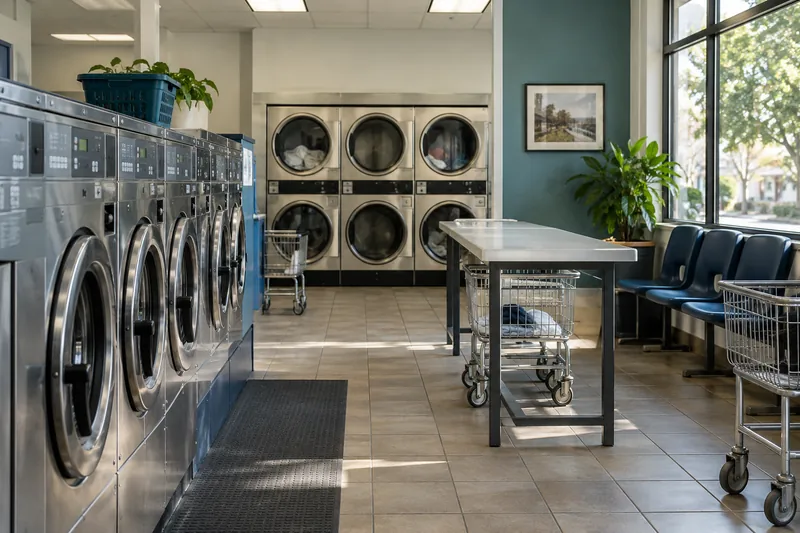
Most buyers want the turnkey laundromat: newer machines, steady revenue, a clean floor, and a semi-absentee owner. And they pay a premium for it — as they should. But there's a different, more entrepreneurial path that experienced operators quietly favor: buying the tired, underperforming store that a passive or burned-out owner has let slide, acquiring it at a discount, and doing the work to bring it back to life. When it works, the value-add play produces returns a turnkey purchase rarely can.
It also carries more risk, and it isn't for everyone. This guide is the honest version: how to tell a fixable store from a lost cause, the turnaround playbook that actually moves the numbers, how to finance a value-add deal, and what upside is realistic. If you're comparing this against buying a stabilized store, read it alongside our guide to buying your first laundromat.
Why Underperforming Stores Are the Best Value
Use a multiple only after identifying the income measure, the included assets and the comparison period. National reported sold-business benchmarks are useful context, but they do not establish a city-specific price or real-estate cap rate. Compare the underlying earnings definitions before drawing a conclusion.
Crucially, this only works when the underperformance is fixable. A store that's struggling because its owner is disengaged is an opportunity. A store that's struggling because the neighborhood is emptying out or the lease is untenable is a trap. Everything in a distressed acquisition rides on telling those two apart — which is why diagnosis comes before purchase.
Diagnosing the Cause of Underperformance
Before you make an offer, become a detective. Your job is to identify exactly why the store isn't performing, and whether you can realistically fix it. The causes fall into two categories.
Fixable Causes (the Opportunity)
- Absentee or burned-out management. The owner stopped caring, stopped marketing, and stopped maintaining the store. This is the single best kind of distress to buy — the demand is there; the effort isn't.
- Broken or dated equipment. Out-of-order machines directly reduce capacity and drive customers away. Fixing or replacing them is a knowable capital cost with a direct revenue payoff — see our equipment upgrade guide.
- Limited hours. A store closing early or opening late is leaving revenue on the table. Extending hours is often the fastest, cheapest win available.
- Poor cleanliness and atmosphere. Dirty, poorly-lit, uninviting stores lose customers to nicer competitors. Cleaning up is low-cost and high-impact.
- No marketing or online presence. Many failing stores have zero Google presence and do nothing to attract customers.
- Outdated payment systems. Coin-only stores in modern neighborhoods may be losing customers who expect card/app payment — see coin vs. card.
- No wash-dry-fold. A store leaving the higher-margin wash-dry-fold revenue untapped has obvious upside.
Structural Causes (the Trap)
- A declining trade area. If the renter population that feeds the store is shrinking, no amount of effort fixes it. Study the neighborhood demographics.
- A bad or short lease. An untenable rent-to-revenue ratio or a lease about to expire with no renewal can make a turnaround pointless. Diagnose the lease before anything else.
- Overwhelming competition. A newer, superior store nearby may be structurally taking the market's demand.
- Fundamentally poor location. Bad visibility, no parking, or an unsafe setting are hard to overcome.
Run the full due diligence process with extra intensity on a distressed store, and verify the (low) revenue just as carefully as you would a healthy store's — using the revenue checks and the water bill test. You want to confirm both that the store is as weak as it looks (so you don't overpay) and that the weakness is fixable.
The Turnaround Playbook and 90-Day Plan
Once you've bought a fixable store, sequence your improvements from fastest/cheapest to slowest/most-expensive. Early wins build cash flow and confidence to fund the bigger moves.
The First 90 Days: Quick Wins
- Fix every broken machine. Restore full capacity immediately — out-of-order machines are lost revenue every single day.
- Deep clean and improve lighting. A visibly cleaner, brighter, safer store wins back customers quickly and cheaply.
- Extend hours to capture demand the previous owner ignored.
- Establish an online presence. Claim and optimize the Google Business Profile, get the store on the map, and start collecting reviews.
- Fix obvious annoyances — a broken change machine, a missing trash can, no working Wi-Fi, no working restroom. Small friction points drive customers away.
Months 3–12: Deeper Repositioning
- Upgrade payment systems to card/app if the market expects it, which also unlocks better revenue tracking and tools like loyalty and dynamic pricing.
- Selectively replace equipment — prioritize high-demand machine sizes and worst offenders, using the capital the quick wins have generated.
- Add wash-dry-fold and, where it fits, pickup-and-delivery to layer in higher-margin revenue.
- Build repeat traffic with a loyalty program and consistent local marketing.
The discipline that separates successful turnarounds from money pits: let the store's improving cash flow fund the next stage, rather than pouring in all your capital at once on faith. Prove each improvement works before you scale the spending.
Financing a Value-Add Deal and Realistic Upside
Financing the Purchase Plus the Rehab
A distressed store is priced low, which helps your down payment — but you also need capital for the turnaround, so plan for both. Options include:
- SBA financing that can bundle the acquisition with equipment and working capital in a single 7(a) loan — useful when you're re-equipping. See the 2026 SBA guide. Note that lenders scrutinize turnaround deals more closely, since they're lending against a store with weak current cash flow.
- Seller financing. A motivated seller of a struggling store is often willing to carry a note, which can reduce your cash-to-close and keep them cooperative during transition — see seller financing structures.
- Equipment financing for the machines you replace, spreading that cost over time — see equipment financing in Illinois.
Whatever the mix, keep a genuine reserve. Turnarounds run longer and cost more than the plan says; the buyers who fail are usually the ones who ran out of runway just before the improvements paid off.
Realistic Upside — and How to Price For It
The cardinal rule: value the store on today's verified earnings, not tomorrow's potential. The upside is your reward for the work and risk you're taking on — don't hand it to the seller by paying for it upfront. Buy on current numbers, budget the turnaround cost separately, and make sure the deal survives even if the improvement is slower than hoped. When it goes well, the payoff is real and double-barreled: higher ongoing cash flow, plus a substantially higher resale value thanks to the earnings-multiple effect. Model both scenarios in our ROI calculator before you commit.
Eyeing an Underperforming Store in Illinois?
The hardest part of a value-add laundromat deal is the diagnosis — separating a fixable store at a bargain price from a structurally broken one that's cheap for a reason. I help Illinois buyers evaluate distressed and underperforming stores, pressure-test whether the problems are truly fixable, and structure the purchase so the upside stays yours.
Frequently Asked Questions
Is it smart to buy a failing laundromat?
It can be one of the best value plays in the industry — if the store is failing for fixable reasons (poor management, dated equipment, short hours, no marketing) rather than structural ones (a dying trade area, a broken lease). Diagnosing the true cause before you buy is everything.
How do you value an underperforming laundromat?
On its current, verified earnings — not on the potential you hope to unlock. The turnaround upside is your reward for the work and risk, so don't pay the seller for it. Price on today's numbers, budget the rehab separately, and make sure the deal works even if improvement is slow.
How long does a turnaround take?
Quick wins (hours, cleaning, fixing machines) can move revenue within months; a full repositioning to a new stabilized level often takes roughly one to two years. Sequence improvements from cheapest/fastest to costliest/slowest and let cash flow fund each stage.
What's the most common turnaround mistake?
Two: paying the seller for potential that hasn't been realized, and running out of capital before the improvements pay off. Buy on current numbers and keep a real reserve, and you avoid both.
Can a first-time buyer do a turnaround?
It's possible but more demanding than buying a stabilized store — it requires hands-on effort, capital reserves, and honest diagnosis. Many first-time buyers are better served by a turnkey store; those with the time, capital, and appetite for work can do very well with value-add. Getting experienced guidance materially improves the odds.
Separate fixable operations from a structurally weak site
Model a period in which the planned improvements produce no revenue gain. Fund repairs, working capital and debt service through that period. A turnaround can be a reasonable purchase when the downside is financeable; the discount alone does not create a margin of safety.
Sources and review notes
Reviewed October 15, 2026. Primary references support the specific topics below. Practical checklists and explicitly labeled scenarios are our editorial analysis, not reported market outcomes.
- SBA: 7(a) loan program
Program purposes, eligibility and the individual 7(a) loan maximum. - IRS: Publication 334, tax guide for small business
Business recordkeeping, income and expense treatment; owner distributions are not automatically an expense add-back. - BizBuySell: reported sold laundromat valuation benchmarks, 2021–2025
National reported transactions; asking and sold figures are separate. These are historical category benchmarks, not Illinois-specific comparable sales.
Use this material to prepare questions and documents. A specific transaction needs its own legal, tax, lending and equipment review.
Thinking about selling your laundromat?
Start with a private conversation about your records, lease, equipment and timing. You do not need to have a price in mind.
Discuss your next step