A useful remote-management system should answer a practical question: who responds when the alert arrives? Map machine faults, payment failures, door access, customer refunds and network outages to an accountable person. A notification without a response process can create the appearance of control while service deteriorates.
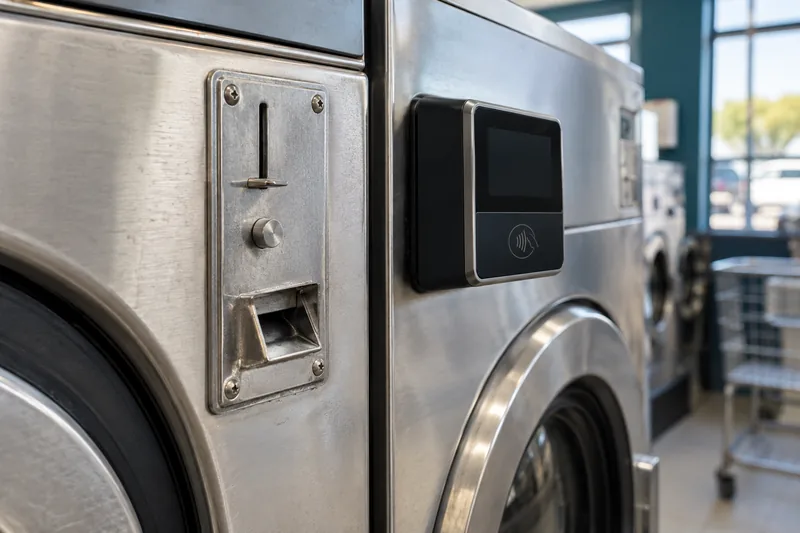
Picture two laundromat owners on a Tuesday morning. The first is driving across town for the third time this week — once to collect quarters, once because a machine showed an error code, and today because a customer called to complain about a broken dryer. The second is sitting at a coffee shop reviewing a dashboard on their phone that shows real-time machine status, yesterday's revenue, and a maintenance alert that was already dispatched to their service provider automatically. Both own profitable Illinois laundromats. Only one owns a smart laundromat — and the gap between these two operational realities is technology.
In 2026, AI business management tools and IoT-connected equipment have transformed what's possible for laundromat owners who want to operate remotely. This isn't about replacing the fundamentals of running a good store — cleanliness, reliable machines, fair pricing, good location. It's about eliminating the unnecessary friction between you and your time. This guide covers the full technology stack available to Illinois laundromat operators right now, what it costs, what it delivers, and how to evaluate whether upgrading makes sense for your specific situation.
The Digital Transformation of Coin-Op
The laundromat industry's relationship with technology has historically been arms-length. Coin mechanisms haven't changed fundamentally in 70 years. Many stores still use manual collection systems, paper maintenance logs, and zero data capture beyond what the owner notices in person. This isn't an industry failing — it's a reflection of the fact that the underlying business model was profitable enough to make technology investment feel optional.
Why 2024–2026 Is the Inflection Point
Three converging forces have made technology adoption urgent rather than optional for competitive Illinois operators. First, card-based payment systems have shifted customer expectations: consumers in 2026 expect contactless payment options everywhere, and laundromats that only accept quarters are increasingly losing younger, higher-spending customers. Second, labor market pressures in Illinois have made finding reliable part-time attendants harder and more expensive — technology that reduces the need for on-site staff has genuine financial ROI beyond convenience. Third, equipment manufacturers — particularly Alliance Laundry Systems (Speed Queen) and Dexter Laundry — have embedded network connectivity into their commercial equipment, making machine-level data available in ways that simply weren't possible five years ago.
From Coin Box to Data Dashboard
The foundational shift in the laundromat tech stack is moving from physical coin collection to digital revenue capture. Card-based payment systems record every transaction with timestamp, machine ID, and cycle type. Over 90 days of operation, this data tells you which machines are your highest earners, which time slots are underutilized, whether your pricing is optimal relative to demand, and whether revenue trends are improving or deteriorating. Owners who've made this shift describe it as the difference between driving blind and having a GPS — and it's a prerequisite for everything else discussed in this article. For owners evaluating whether to upgrade equipment entirely, our guide to laundromat equipment upgrades covers the financial case in detail.
Top Remote Management Software for 2026
Several platforms have emerged as genuine leaders in laundromat remote management. Each has different strengths, pricing models, and compatibility with specific equipment brands. Here's the current landscape for Illinois operators.
PayRange: The Mobile Payment Pioneer
Use an equipment-level inventory, service history and installed-cost quotes to evaluate the proposal. Track the effect on availability, repair response and customer use rather than assuming a standard revenue lift or repair saving. Retain evidence of the results a buyer will actually inherit.
Laundrycard and CryptoPay: Full-System Card Solutions
For operators ready to move entirely away from coins, Laundrycard and CryptoPay offer comprehensive card-reader replacement systems that integrate with existing machines. These systems give customers a stored-value card or mobile app to pay for cycles, and give owners a complete management dashboard covering transactions, machine utilization, vend counts, and revenue trends. Both platforms support remote price adjustments — meaning you can change wash cycle prices from your phone without setting foot in the store.
Manufacturer-Native Platforms: Speed Queen Command and Dexter Live
When buying new equipment, the manufacturer's own management platform is often the most tightly integrated option. Alliance Laundry's Speed Queen Command platform provides machine-level diagnostics, remote programming, error alerts, and utilization data for connected machines. Dexter's Dex Connect system offers similar functionality for their commercial equipment line. These platforms shine when an owner operates multiple locations — viewing all stores' machine status from a single dashboard is the kind of operational leverage that makes true absentee ownership realistic at scale.
CENTS: The All-in-One Operations Platform
CENTS has emerged as a comprehensive operations software platform specifically designed for laundromat businesses. It handles point-of-sale, customer management, wash-and-fold order tracking, delivery route management, employee scheduling, and financial reporting in a single platform. For stores adding drop-off and delivery services to their self-service base, CENTS eliminates the need for multiple disconnected software tools. The platform integrates with several payment systems and increasingly with connected equipment, making it the closest thing to a true all-in-one laundromat operating system available in 2026.
Using AI for Predictive Maintenance and Scheduling
Remote monitoring tells you what's happening right now. AI-driven predictive maintenance tells you what's going to happen — before a machine breaks, before a customer sees an "Out of Order" sign, and before you lose a Saturday's worth of revenue on a failed dryer bearing. This is where the technology becomes genuinely transformative for operators who've invested in connected equipment.
How Machine Learning Detects Early Failure Patterns
Measure consumption from the actual billing periods and installed equipment specifications. Verify billing units, wash formulas, non-vend use, fixed charges and the applicable tariff. A generic savings percentage or gallons-per-cycle assumption cannot establish this store’s expense, revenue or upgrade payback.
Evaluate the full occupancy obligation using the signed lease, amendments and additional-rent history. Include known escalations and repair responsibilities, then test the store’s cash flow after planned labor and financing. No universal rent ratio makes an uncertain assignment or renewal right acceptable.
AI-Optimized Cleaning and Staffing Schedules
Build staffing from the actual tasks, coverage requirements and market quotes for the work. Include owner responsibilities that will need to be replaced after closing. The distinction between SDE and managed-store cash flow matters more than a generic promise of low owner hours.
Revenue Analytics and Demand Forecasting
Beyond maintenance, AI-enabled analytics platforms can identify revenue optimization opportunities invisible to manual review. Which machines are approaching end-of-useful-life based on cycle counts versus their contribution to total revenue? Which price points are underutilized based on time-of-day demand patterns? Are there seasonal patterns in your specific neighborhood that should inform promotional scheduling? The automated passive income ideal isn't just about reducing owner time — it's about making better decisions faster using data that was previously simply unavailable.
Maximizing ROI through Automation Tech
The investment case for technology in a laundromat has to be evaluated like any other capital allocation: what does it cost, what does it deliver, and over what timeframe? The honest answer varies meaningfully by store type and current baseline.
The Technology Investment Spectrum
Technology's Impact on Business Valuation
Use a multiple only after identifying the income measure, the included assets and the comparison period. National reported sold-business benchmarks are useful context, but they do not establish a city-specific price or real-estate cap rate. Compare the underlying earnings definitions before drawing a conclusion.
Building a Complete Digital Nomad Business
The fully realized digital nomad business version of laundromat ownership — where an owner genuinely manages from anywhere with minimal in-person requirements — typically involves five technology layers working together: (1) card-based or app-based payment capturing all revenue digitally; (2) real-time machine monitoring with push alerts for errors and outages; (3) a contracted local service provider relationship for maintenance (on-call, not reactive emergency); (4) a contracted cleaning service on a fixed schedule; and (5) a trusted local contact — often a part-time employee or trusted neighbor — who can respond to on-site issues that require physical presence. With this stack in place, owners routinely manage their Illinois stores in under 8 hours per week from anywhere in the world.
Frequently Asked Questions: AI and Technology for Illinois Laundromats
How much does it cost to add smart technology to an existing Illinois laundromat?
Can I really manage a laundromat from my phone?
What's the best payment system for a small Illinois laundromat?
For existing coin stores adding mobile payment without full replacement, PayRange is typically the best entry point due to low installation complexity and proven revenue uplift. For stores replacing coin mechanisms entirely, Laundrycard and CryptoPay offer more comprehensive management features. For new equipment purchases, manufacturer-native systems (Speed Queen Command, Dexter Connect) offer the tightest integration. The right choice depends on your store's current equipment, customer demographics, and long-term plans.
Does AI technology actually predict machine failures before they happen?
Yes — for connected machines with the relevant sensors installed. Platforms using machine learning on vibration, temperature, and operational data can identify anomalies that precede common failure modes with meaningful accuracy. This capability is most advanced in newer commercial equipment from Alliance Laundry and Dexter, and can be partially replicated with third-party IoT sensors added to existing machines. The ROI of preventing even one emergency repair call on a busy Saturday typically justifies the technology cost.
Will a tech-upgraded laundromat sell for more money?
Before buying a platform, test export access, account ownership, connectivity failure, user permissions and the vendor’s transfer process. Retain independent records of collections and refunds. A buyer should be able to take over the system without inheriting the seller’s personal logins or losing transaction history.
What's the minimum technology investment a new laundromat buyer should make?
At minimum, add a mobile payment system capable of capturing digital transaction data within the first 90 days of ownership. This single investment improves operational visibility, begins building the revenue history needed for future sale, and captures card-preferring customers immediately. Even if you don't pursue additional technology immediately, having clean digital revenue data from day one is one of the most valuable operational decisions a new buyer can make.
Are there Illinois-specific considerations for laundromat technology adoption?
For an SBA-backed acquisition, confirm the current program rules and the lender’s written conditions for this borrower and transaction. The individual loan maximum, combined borrowing policy, required equity and treatment of seller debt are distinct questions. A lender must approve the complete uses-of-funds and repayment structure.
Thinking About Buying a Tech-Ready Illinois Laundromat?
Illinois Laundry Broker can help you identify stores that are already equipped with modern technology — and those where a technology upgrade represents an immediate value-creation opportunity. We'll help you evaluate the tech stack of any acquisition target and understand what it would cost to bring it up to 2026 operating standards.
Talk to a BrokerThe Operator Who Adapts Wins
Technology doesn't change what makes a laundromat fundamentally valuable: location, clean machines, fair pricing, a reliable customer base. But AI business management tools and smart laundromat systems do change what's possible for operators who want to build genuinely scalable, semi-passive businesses in 2026.
The gap between a tech-equipped Illinois laundromat owner and a traditionally operated one is widening every year — in operational efficiency, in revenue capture, in business valuation, and in quality of life. The owners who are managing three locations from their phones today didn't start there; they added technology incrementally, proved the ROI at each stage, and reinvested in capabilities that reduced their operational burden further.
If you're evaluating a laundromat acquisition in Illinois and want an honest assessment of a specific store's technology baseline — and what it would take to bring it to 2026 standards — reach out to Illinois Laundry Broker. We've evaluated hundreds of Illinois laundromats and can give you a clear-eyed picture of where a target stands and what the upgrade path looks like.
Word count: 2,758
Require an exception-handling plan
Before buying a platform, test export access, account ownership, connectivity failure, user permissions and the vendor’s transfer process. Retain independent records of collections and refunds. A buyer should be able to take over the system without inheriting the seller’s personal logins or losing transaction history.
Sources and review notes
Reviewed October 15, 2026. Primary references support the specific topics below. Practical checklists and explicitly labeled scenarios are our editorial analysis, not reported market outcomes.
- Speed Queen: model-specific front-load washer specification sheet
An example of model-specific published cycle consumption; do not apply one model’s specification to an entire store. - U.S. Department of Energy: commercial clothes washers
Defined equipment categories, standards and rulemaking status; not a promise of savings for a particular installation. - U.S. Department of Energy: water-intensive processes
Water-efficiency practices; application and savings depend on the installed equipment and operation. - CISA: cybersecurity for small and medium businesses
Business cybersecurity planning, software updates and access controls; relevant to remote monitoring and connected systems.
Use this material to prepare questions and documents. A specific transaction needs its own legal, tax, lending and equipment review.
Thinking about selling your laundromat?
Start with a private conversation about your records, lease, equipment and timing. You do not need to have a price in mind.
Discuss your next step