A seller who owns both the building and the laundry should prepare separate asset schedules before negotiating. Identify the land, building, equipment, inventory, goodwill and other rights that may transfer. Have the CPA and transaction attorney examine the proposed allocation together; the amount assigned to real property is not automatically the entire sale price.
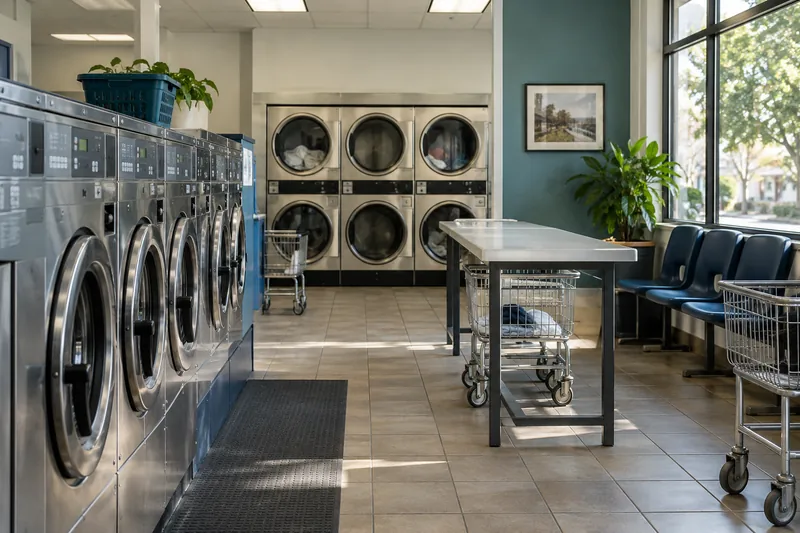
A seller who owns both the building and the laundry should prepare separate asset schedules before negotiating. Identify the land, building, equipment, inventory, goodwill and other rights that may transfer. Have the CPA and transaction attorney examine the proposed allocation together; the amount assigned to real property is not automatically the entire sale price.
The qualified intermediary should be involved before the closing structure is fixed and before the seller receives proceeds intended for an exchange. Keep an exchange calendar separate from the business handover checklist. Landlord obligations, lender payoff statements and operating-company transfers can affect timing even where the tax objective is focused on real estate.
This guide explains exactly how 1031 exchanges work for laundromat owners, the critical rules and deadlines you must follow, common mistakes to avoid, and the best replacement property options for Illinois laundromat sellers looking to maximize their tax-deferred wealth creation.
Disclaimer: This article provides general educational information about 1031 exchanges. Tax laws are complex and individual situations vary significantly. Always consult with a qualified tax attorney or CPA before making any decisions based on this information.
What Is a 1031 Exchange and
A 1031 exchange is a tax-deferral mechanism that allows an investor to sell a "relinquished property" and defer recognition of the capital gain — as long as the proceeds are reinvested into a "like-kind" replacement property within specific time limits. The taxes are deferred, not eliminated — but the deferral allows you to continue investing the full pre-tax proceeds, compounding your wealth significantly over time.
How Much Tax Can a 1031 Exchange Save You?
Have the transaction’s tax adviser distinguish the operating assets from qualifying real property and review the proposed allocation before closing. Rates, basis, gain character and reporting depend on the taxpayer and the assets. An exchange or seller note does not automatically defer every tax associated with selling a laundry business.
Does a Laundromat Qualify for a 1031 Exchange?
This is the critical question — and the answer is nuanced. A 1031 exchange applies to "real property held for productive use in a trade or business or for investment." For a laundromat, this typically means the real estate component of the transaction qualifies, but the personal property components (equipment, goodwill) have different treatment since the Tax Cuts and Jobs Act of 2017 restricted 1031 exchanges to real property only.
Practical implications:
- Laundromat owner who also owns the real estate: The real estate portion can qualify for a 1031 exchange; the business/equipment portion generally cannot
- Laundromat owner who leases the space: A standard 1031 exchange is typically not available (there's no real property being sold). However, other tax planning strategies may apply
- Long-term leasehold interests: In some circumstances, a leasehold of 30+ years may qualify — consult a qualified intermediary or tax attorney
For the Illinois laundromat owners who own their real estate — a common scenario for established operators — the 1031 exchange is a powerful and clearly available tool. Work with a qualified tax professional to understand exactly which components of your transaction qualify.
Step-by-Step Guide to Completing a 1031 Exchange When Selling Your Laundromat
The 1031 exchange process has specific requirements that must be followed precisely. Failing to meet any of the deadlines or procedural requirements invalidates the exchange and subjects the full gain to immediate taxation.
Step 1: Engage a Qualified Intermediary (QI) Before Closing
A Qualified Intermediary (also called an accommodator or exchange facilitator) is a third-party professional who holds the exchange proceeds and facilitates the transaction in compliance with IRS requirements. The QI must be engaged before you close on the sale of your relinquished property. Once you receive the proceeds personally, the exchange is disqualified — regardless of your subsequent intentions. Never touch the money between transactions.
Step 2: Close the Sale of the Relinquished Property
Proceeds from the sale go directly from the closing to your QI — not to you. The QI holds these funds in a segregated account. The exchange clock starts on the day of closing.
Step 3: Identify Replacement Properties Within 45 Days
Within 45 calendar days of closing your relinquished property, you must formally identify potential replacement properties in writing to your QI. The IRS provides three identification rules:
- Three-property rule: Identify up to 3 properties regardless of value
- Distinguish advertised asking terms from completed reported transactions. Review the national historical benchmark in the valuation guide, then assess the particular lease, documentation, labor requirements and deferred equipment spending. The price of another store cannot be applied without those differences.
- Make the decision from the actual operating records and transaction terms. Record the assumptions, identify the supporting documents and test the effect of a less favorable outcome. Keep an illustrative possibility separate from a documented result or a promise about what a buyer or seller will achieve.
Most exchangers use the three-property rule for simplicity. Identify your strongest candidates promptly — the 45-day window passes quickly, and you cannot extend it.
Step 4: Close on the Replacement Property Within 180 Days
You must close on your replacement property within 180 calendar days of closing the relinquished property (or the due date of your tax return, whichever comes first). Note that the 180-day period is not an extension of the 45-day identification period — both run concurrently from the same start date.
Step 5: Meet the "Like-Kind" Requirement
For real property, "like-kind" is interpreted broadly by the IRS. You can exchange a laundromat's real estate for virtually any other U.S. real property held for investment or business use — commercial real estate, industrial property, multifamily housing, raw land, or another laundromat. You are not required to reinvest in another laundromat.
Top 1031 Exchange Rules and Deadlines Laundromat Owners Must Follow to Avoid Costly Mistakes
The 1031 exchange rules leave no room for interpretation errors — and mistakes are expensive. Here are the critical compliance points.
Non-Negotiable Rules Summary
- No constructive receipt: You cannot personally receive or control the exchange proceeds at any time between transactions
- Same taxpayer: The same taxpayer (entity or individual) who sells the relinquished property must acquire the replacement property
- Equal or greater value: To defer all gain, the replacement property must be of equal or greater value than the relinquished property; lower-value replacement creates a "boot" (taxable portion)
- Equal or greater debt: If the relinquished property had mortgage debt, the replacement property must have equal or greater debt (or you must add cash) to avoid "mortgage boot"
- Intent: Both the relinquished and replacement property must be held for investment or productive use in a trade or business — not for personal use or immediate resale
What Happens If You Miss the Deadlines?
If you miss either the 45-day identification deadline or the 180-day closing deadline, the exchange fails. The full capital gain becomes recognized in the tax year of the sale, and you owe all applicable federal and Illinois state taxes. There are no extensions available, regardless of circumstances, except in very limited IRS-declared disaster area situations. This is why professional guidance and meticulous calendar management are essential from day one of the exchange process.
Best Replacement Properties for Laundromat Owners Using a 1031 Exchange to Maximize Wealth
One of the most liberating aspects of the 1031 exchange for laundromat owners is the flexibility in replacement property choice. You've built expertise in the commercial real estate and small business investment space — and there are excellent replacement opportunities that leverage that expertise.
Another Laundromat (Same or Different Market)
The most natural replacement for many laundromat sellers is another laundromat in a market they know well. This strategy keeps your expertise and operational knowledge fully deployed, potentially in a higher-growth market or at a more favorable price point than your relinquished property commanded. If you're evaluating whether a new laundromat acquisition makes sense as a replacement investment, our guide to whether buying a laundromat is a good investment in 2026 provides current market context. Illinois Laundry Broker can help you identify qualified replacement laundromat properties actively available in Illinois. See our current listings through the contact page.
NNN (Triple Net) Commercial Real Estate
The defensible price is the one supported by verified earnings, transferable premises rights and the equipment obligations a buyer will inherit. Keep business value separate from real estate and explain capital needs without counting the same expense twice. A headline multiple is a starting question, not an appraisal.
Multifamily Residential Property
Evaluate the full occupancy obligation using the signed lease, amendments and additional-rent history. Include known escalations and repair responsibilities, then test the store’s cash flow after planned labor and financing. No universal rent ratio makes an uncertain assignment or renewal right acceptable.
Delaware Statutory Trust (DST) Investments
For laundromat sellers who want to defer taxes but prefer a fully passive replacement investment, Delaware Statutory Trusts (DSTs) provide an IRS-recognized 1031-eligible vehicle that gives fractional ownership of institutional-quality real estate without management responsibility. DSTs are managed by professional sponsors and provide regular income distributions. They're particularly useful when the 45-day identification deadline is approaching and you haven't identified a suitable direct replacement property.
Frequently Asked Questions: 1031 Exchanges for Laundromat Owners
Can I use a 1031 exchange if I lease my laundromat space rather than own the real estate?
Standard 1031 exchanges apply to real property, so if you lease your space and don't own the underlying real estate, the traditional 1031 exchange generally isn't available for your transaction. However, other tax strategies — installment sales, opportunity zone investments, or business structure planning — may provide tax benefits. Consult with a tax professional experienced in business sales to explore your options.
How do I find a Qualified Intermediary for my 1031 exchange?
What is the capital gains tax rate on a laundromat sale in Illinois?
Can I move into the replacement property if it's residential?
The replacement property must initially be held for investment purposes — you cannot acquire it with immediate personal use intent. However, after holding the replacement property as an investment for a qualifying period, some conversions to personal use may be possible. This is a complex area with specific IRS rules; consult your tax advisor for guidance on any specific scenario.
What happens to my deferred taxes when I eventually sell the replacement property?
The deferred gain carries forward into the replacement property. When you ultimately sell the replacement property without doing another exchange, the accumulated deferred gain (plus any new gain) becomes taxable. Alternatively, you can do another 1031 exchange at that point to continue deferring, or hold the property until death — in which case the heir receives a stepped-up tax basis and the deferred gain is eliminated entirely under current tax law.
Do I need to reinvest the entire sale proceeds into the replacement property?
To defer all capital gains, you must reinvest all net proceeds (after paying off any existing mortgage on the relinquished property) into a replacement property of equal or greater value, and the replacement property must have equal or greater debt than the relinquished property had. Any proceeds not reinvested, or any "boot" received, are taxable in the year of exchange. Partial exchanges (where some boot is taken) are possible but create partial tax recognition.
Explore 1031 Exchange Options for Your Illinois Laundromat
Illinois Laundry Broker works with laundromat sellers to identify replacement property options — including other Illinois laundromats — that qualify for 1031 exchange treatment. Connect with us to explore your options.
Discuss Your Exchange OptionsThe 1031 Exchange Is One of the Wealthiest Decisions You Can Make
The mechanics require careful execution — engage a Qualified Intermediary before closing, meet the 45-day identification deadline without exception, close within 180 days, and work with experienced tax counsel throughout. But for sellers who follow the rules, the financial rewards are substantial and enduring.
If you're considering selling your Illinois laundromat and want to explore how a 1031 exchange might apply to your situation, start with a conversation with your CPA and a consultation with the team at Illinois Laundry Broker. We can help you understand your transaction structure and identify qualified replacement properties — putting you in the strongest possible position for a tax-efficient exit.
Word count: 2,752
Plan the property allocation before signing an LOI
The qualified intermediary should be involved before the closing structure is fixed and before the seller receives proceeds intended for an exchange. Keep an exchange calendar separate from the business handover checklist. Landlord obligations, lender payoff statements and operating-company transfers can affect timing even where the tax objective is focused on real estate.
Put exchange eligibility and deadlines on their own track
Section 1031 generally applies to qualifying real property held for business or investment. Ordinary laundry equipment and operating-business goodwill do not become eligible merely because they are sold with a building. Have the advisers identify the property interests, allocation and taxpayer before relying on exchange treatment.
For a deferred exchange, the general identification period is 45 days. Receipt of replacement property is generally limited to 180 days or the taxpayer’s return due date, including extensions, whichever is earlier. Rules about identification, receipt of proceeds and the intermediary arrangement also matter; a deadline calendar is not a complete compliance analysis.
Bring the qualified intermediary and tax adviser into the process before closing or receipt of funds intended for the exchange. Review IRS Form 8824 instructions for the federal framework and obtain advice on the particular transaction, asset allocation and state reporting.
Sources and review notes
Reviewed October 15, 2026. Primary references support the specific topics below. Practical checklists and explicitly labeled scenarios are our editorial analysis, not reported market outcomes.
- IRS: like-kind exchanges and real property
Section 1031 generally applies to qualifying real property, not operating-business goodwill or ordinary equipment. - IRS: Publication 544, sales and other dispositions of assets
Asset sales, gain recognition and allocation considerations; tax treatment depends on the facts. - IRS: Form 8594, asset acquisition statement
Buyer/seller reporting for applicable asset acquisitions and purchase-price allocation.
Use this material to prepare questions and documents. A specific transaction needs its own legal, tax, lending and equipment review.
Thinking about selling your laundromat?
Start with a private conversation about your records, lease, equipment and timing. You do not need to have a price in mind.
Discuss your next step